

South Korea now performs 13.5 cosmetic procedures per 1,000 people, the highest rate globally according to 2026 industry data. If you’re considering a thread lift in korea, you likely already know that the country’s reputation for aesthetic innovation is unmatched. It’s natural to feel some hesitation about the technical details. You want a rejuvenated look that doesn’t look “over-pulled,” but the differences between PDO, PCL, and PLLA materials can feel confusing when researching from abroad.
We understand that you’re looking for a balance of clinical excellence and personal comfort. This guide will show you why Korea’s 2026 advancements, such as ultrasound-guided placement and AI-simulated modeling, provide the precision you need for a natural result. We’ll compare the latest thread materials and explain how specialized coordination can handle everything from your medical visa to recovery support. You’ll discover how to choose the right technique for your face shape and ensure your journey to Seoul is entirely stress-free.
Key Takeaways
- Understand how modern techniques target the SMAS layer to provide a natural repositioning of facial tissues rather than a simple surface pull.
- Learn how to select the right material for your thread lift in korea by comparing the longevity and collagen-stimulating properties of PDO, PLLA, and PCL threads.
- Discover how ultrasound-guided technology eliminates guesswork, ensuring threads are placed at the precise depth to prevent common issues like dimpling or asymmetry.
- Determine if you’re a better candidate for a thread lift or a non-invasive HIFU treatment based on your skin elasticity and desired recovery time.
- Identify the essential steps for verifying surgical credentials and managing the logistical details of your medical trip to ensure a secure, high-standard experience.
The Evolution of the Thread Lift in Korea: What to Expect in 2026
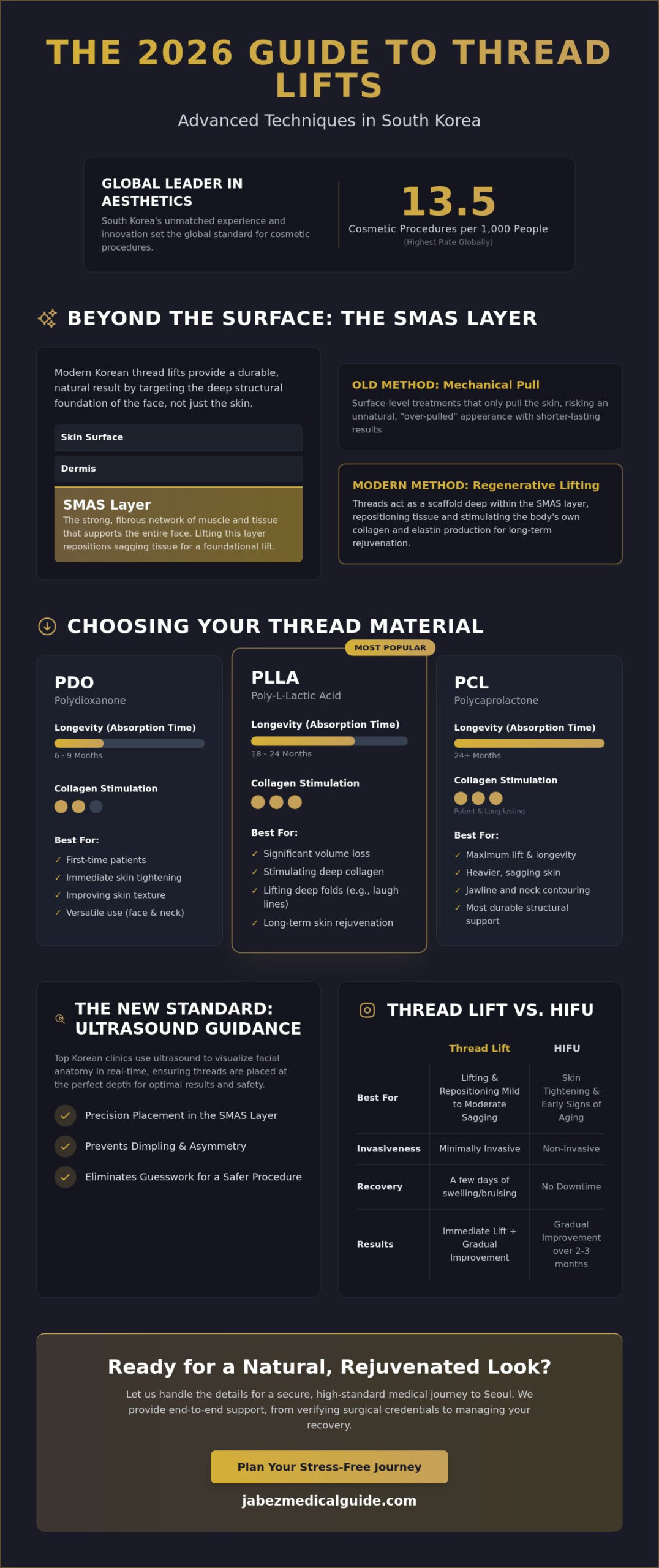
A modern thread lift in korea is far more than a simple cosmetic enhancement; it’s a precision-engineered repositioning of the face’s structural foundation. By 2026, the procedure has evolved into a minimally invasive technique that specifically targets the SMAS layer. This deep-tissue approach allows practitioners to lift sagging areas without the invasive nature of traditional surgery. Because South Korea maintains the highest per capita rate of cosmetic procedures globally, its medical community has refined these methods through an unparalleled volume of cases. This collective experience ensures that techniques are constantly updated to meet the highest safety standards.
The current year marks a definitive shift toward “regenerative lifting.” In the past, the primary goal was a mechanical pull to tighten the skin. Today, the focus is on rebuilding the dermal matrix from within. The threads used in top Seoul clinics serve as a biological scaffold, encouraging the body to produce fresh collagen and elastin long after the threads themselves have dissolved. This focus on long-term skin health coincides with a change in the “K-Beauty” aesthetic. Most patients now move away from the once-popular “V-line” obsession. Instead, they seek a balanced facial harmony that emphasizes a refreshed, age-appropriate appearance rather than a dramatic transformation.
Why International Patients Choose Korea Over Local Options
Many international travelers choose Seoul because of the exceptional experience levels of board-certified surgeons. A high “volume-experience” ratio means these doctors have encountered a wide variety of facial structures, allowing them to tailor every procedure with meticulous care. The cost-to-quality advantage remains a significant draw. Even when accounting for travel and the assistance of professional coordination, the level of specialized care and the use of cutting-edge materials often provides better value than local options. Many advanced thread materials used in Korea are at the forefront of medical technology, offering benefits that aren’t yet available in many other countries.
The Role of the SMAS Layer in Modern Lifting
The SMAS layer is the sturdy network of muscle and connective tissue that supports the entire face. For a helpful thread lift overview, it’s useful to see how this layer is typically the focus of major surgical procedures. Modern Korean thread techniques are unique because they target this deep tissue without requiring large incisions. Unlike surface-level treatments that only affect the skin’s top layers, deep-plane thread repositioning addresses the underlying cause of facial sagging. This results in a more durable lift that avoids the “tight” or “pulled” look often associated with less sophisticated methods.
Comparing Thread Materials: PDO vs. PLLA vs. PCL
Choosing the right material for your thread lift in korea is a decision that impacts both your immediate result and your long-term satisfaction. While clinics in many other countries might offer a single type of thread, top-tier Seoul practitioners often use a “cocktail” approach. This involves combining different materials to address specific concerns, such as jawline sagging and fine lines, in a single session. Every bio-absorbable thread follows a predictable lifecycle. It begins with an immediate mechanical lift as the threads anchor into your tissue. This is followed by a bio-stimulation phase where your body produces new collagen around the scaffold. Eventually, the thread is safely absorbed, leaving behind a reinforced dermal matrix that maintains the lift.
The choice of material usually depends on your skin thickness, age, and aesthetic goals. Younger patients with early signs of sagging often benefit from lighter materials that focus on skin quality. Conversely, patients with more significant tissue laxity require the structural strength of premium, long-duration threads. If you’re feeling overwhelmed by these technical choices, a professional dermatology treatment management service can help you identify clinics that specialize in the specific materials best suited for your face shape.
PDO (Polydioxanone): The Gold Standard for Versatility
PDO is the most common material used in Korean clinics due to its exceptional safety profile and predictable results. These threads typically absorb within 6 to 9 months, making them an excellent entry point for first-time patients. PDO is particularly effective for immediate contouring and improving skin texture. In Korea, you’ll find three main types of PDO threads:
- Mono threads: Smooth threads placed in a mesh-like pattern to tighten the skin.
- Screw threads: One or two threads intertwined around the needle to provide subtle volume in sunken areas.
- Cog threads: Barbed threads that physically hook into the skin to provide a visible lift for the jowls and cheeks.
PLLA and PCL: The Long-Duration Alternatives
For patients seeking longer-lasting results, PLLA and PCL represent the premium tier of a thread lift in korea. PLLA (Poly-L-Lactic Acid) is a material known for its superior ability to restore volume by stimulating aggressive collagen production. PCL (Polycaprolactone) is the most durable option available. It degrades much more slowly than PDO, with results often lasting up to 24 months. These materials are softer and more flexible, which reduces the risk of feeling the threads under the skin. While they require a higher investment, their longevity and intense regenerative properties make them a preferred choice for comprehensive facial rejuvenation.
Ultrasound-Guided Lifting: The New Standard for Safety and Precision
Clinics in Seoul have moved beyond the traditional “blind” insertion methods that once dominated the industry. A premier thread lift in korea now utilizes real-time ultrasound imaging to provide a clear view beneath the skin’s surface. This technology allows surgeons to see the exact thickness of the dermis and the location of the SMAS layer as they work. By visualizing these structures in real-time, the surgeon can ensure that every thread is anchored at the optimal depth. This level of precision is no longer just an optional upgrade; it’s a mandatory requirement for international patients who prioritize safety and elite aesthetic outcomes.
One of the most significant benefits of this imaging technology is its ability to address the primary fears of many patients: facial asymmetry and “dimpling.” Dimpling occurs when a thread is placed too close to the surface, pulling on the skin in an uneven way. Asymmetry often results from slight variations in placement depth between the two sides of the face. Ultrasound guidance removes the guesswork, allowing for a perfectly symmetrical application that respects the natural contours of your face. It also provides a critical safety net by helping the doctor avoid major facial nerves and blood vessels, which are clearly visible on the monitor during the procedure.
Mapping the Facial Anatomy in 3D
Before the first thread is even inserted, many top-tier clinics conduct a comprehensive diagnostic phase using 3D-CT scans combined with ultrasound mapping. This data creates a digital blueprint of your unique facial structure. Recognizing that facial anatomy varies significantly based on ethnicity and individual genetics, this personalized mapping is essential for a “bespoke” thread lift in korea. By understanding the specific depth and density of your tissues, your surgeon can choose the exact thread length and tension needed to achieve a harmonious lift that looks entirely natural.
Reducing Downtime Through Micro-Precision
Precision isn’t just about the final look; it’s also about how quickly you can return to your daily life. When a surgeon can see and avoid blood vessels during the insertion process, the risk of significant bruising and swelling drops dramatically. This micro-precision makes a “one-day” recovery much more achievable for many patients. While the procedure itself is highly accurate, your recovery experience also depends on how you manage the days following the lift. Utilizing post-op care services in Korea ensures that you have the professional support needed to monitor your healing process and maintain those precise results as you prepare for your flight home.
Comparison Guide: Thread Lift vs. Other Rejuvenation Options
Deciding on a rejuvenation path requires a clear understanding of your skin’s current state. For those exploring a thread lift in korea, the primary question is whether a non-surgical approach can meet their expectations or if a more invasive procedure is necessary. While some marketing materials claim threads can fully replace a surgical facelift, a professional approach acknowledges that each treatment has a specific role. A thread lift is a repositioning tool, whereas surgery is a corrective procedure for significant skin excess. Understanding this distinction helps you set realistic goals for your aesthetic journey.
The current trend in Seoul focuses on combination therapy. Instead of relying on a single method, practitioners often integrate threads with fillers and skin boosters to address both structural sagging and surface-level volume loss. This multi-layered strategy ensures that the lift looks natural and the skin appears radiant. If you’re unsure which combination is right for your anatomy, our plastic surgery coordination team can help you identify clinics that specialize in these holistic treatment plans.
When to Choose Threads Over Surgery
The ideal candidate for a thread lift is typically between 30 and 55 years old with mild to moderate sagging. One of the greatest advantages is the absence of surgical scarring. Since the procedure is performed under local anesthesia, you avoid the risks and lengthy recovery associated with general anesthesia. This makes it a preferred choice for busy professionals who cannot afford the three weeks of downtime required for surgical recovery. Threads provide a subtle yet visible “refreshed” look that maintains your natural facial expressions without the “over-tightened” appearance sometimes seen in traditional surgery.
The ‘K-Lift’ vs. Ultherapy: Lifting vs. Tightening
It’s important to distinguish between mechanical lifting and thermal tightening. A thread lift in korea provides a physical lift by repositioning the tissue. In contrast, Ultherapy (HIFU) uses focused ultrasound heat to stimulate collagen and tighten the skin from within. In many top Seoul clinics, these are paired together to achieve a 360-degree result. This combination is a cornerstone of modern plastic surgery in korea and dermatology care.
For international patients on a 10-day trip, a typical timeline might involve receiving Ultherapy on the first day to initiate the deep-tissue tightening process. The thread lift is then scheduled for day three or four. This allows any initial sensitivity from the ultrasound treatment to subside before the threads are placed. This sequential approach maximizes the regenerative effects of both treatments, leading to a more durable and comprehensive result than either procedure could provide on its own.
Navigating Your Journey: How to Secure a Safe Thread Lift in Korea
Securing a safe thread lift in korea requires more than just finding a clinic with impressive social media photos. It involves a systematic verification of the surgeon’s credentials to protect yourself from risks like “ghost surgeons.” This term refers to instances where a junior doctor performs the procedure instead of the board-certified specialist you originally selected. You should always confirm that your chosen doctor is the one who will actually perform the thread insertion. Beyond surgeon verification, you must also navigate the complexities of a foreign medical system; this includes managing prescriptions and coordinating essential follow-up appointments.
A reliable medical facilitator serves as your navigator, bridging the gap between your expectations and the clinic’s daily operations. This partnership ensures that every detail is organized before you leave home. Use this checklist to structure your booking process:
- Schedule a virtual consultation to discuss your specific facial anatomy and material choices.
- Secure medical visa assistance if your stay or procedure requirements exceed standard tourist limits.
- Confirm airport pick-up and local transportation to your accommodation to avoid initial travel stress.
- Verify that the clinic utilizes the latest 2026 ultrasound-guided technology for placement.
- Establish a clear recovery support plan for the first 48 hours post-procedure.
The Essential Role of Professional Medical Translation
Relying on general English speakers at a clinic can be a significant risk during a medical procedure. While many staff members can handle basic greetings, they often lack the specialized vocabulary needed for nuanced medical discussions. A dedicated medical interpreter ensures your aesthetic goals, such as the exact degree of lift you desire, are perfectly understood by the surgeon. Jabez Medical Guide maintains a commitment to providing certified medical interpreters for every consultation. This level of precision prevents miscommunications that could lead to unsatisfactory results or misplaced expectations.
Total Coordination: From Airport to Recovery
The success of your journey depends on more than just the time spent in the procedure room. Airport transfers and local support provide the peace of mind necessary for a smooth experience. Having a local partner to handle emergency communication or sudden medication needs is invaluable, especially when you’re recovering in an unfamiliar environment. Jabez Medical Guide encourages readers to view medical tourism in South Korea as a holistic experience. It’s a journey that starts the moment you land and continues until you’re safely back home, supported by a team that prioritizes your safety and comfort at every step.
Your Path to Precise Rejuvenation in Seoul
Achieving a natural and refreshed appearance depends on the synergy between advanced materials and clinical expertise. Selecting the correct bio-absorbable thread and insisting on ultrasound-guided precision are the most effective ways to ensure a safe, symmetrical outcome. A thread lift in korea offers access to the world’s most refined techniques, yet the logistical details of an international medical trip require careful management to maintain your peace of mind.
Jabez Medical Guide acts as your dedicated partner throughout this process. We only work with government-accredited hospitals and provide certified medical interpreters to ensure your goals are clearly understood. Our service includes 24/7 personal concierge support during your stay, handling everything from airport pick-up to recovery management. Book Your Personalized Thread Lift Consultation with Jabez Medical Guide today to begin your journey. We’re ready to help you navigate every step toward a more youthful and radiant version of yourself.
Frequently Asked Questions
How much does a thread lift in Korea cost compared to the US?
A thread lift in korea is typically 40% to 70% more affordable than similar procedures performed in the United States or the United Kingdom. While specific costs depend on the material and number of threads used, the competitive market in Seoul allows for high-end technology at a significantly lower price point. These savings often remain substantial even after you account for travel expenses and professional coordination services.
How long do the results of a Korean thread lift typically last?
The longevity of your results depends primarily on the material selected for your procedure. Standard PDO threads generally provide a visible lift for 6 to 9 months before being fully absorbed by the body. If you choose premium materials like PCL, your results can last up to 24 months. The collagen stimulation triggered during the absorption process often provides a secondary tightening effect that lingers after the threads are gone.
Is the procedure painful, and what kind of anesthesia is used?
Most patients describe the sensation as a series of small pinpricks or a feeling of pressure rather than intense pain. Surgeons typically use local anesthesia to numb the treatment areas, though some clinics offer light sedation for patients with higher anxiety. The use of ultrasound-guided technology further minimizes discomfort by ensuring the threads are placed precisely, avoiding sensitive nerves and reducing internal trauma during the insertion process.
Can I fly back home immediately after a thread lift in Korea?
We generally recommend waiting at least 5 to 7 days before boarding a long-haul flight. Air pressure changes in the cabin can sometimes increase swelling or cause minor discomfort in the days immediately following the procedure. Staying in Seoul for a week also allows you to attend a follow-up appointment, ensuring that your thread lift in korea is healing correctly before you return to your home country.
Are there any side effects or risks specific to Korean thread lifts?
Common side effects include temporary bruising, swelling, and a “tight” sensation that usually subsides within a few days. While rare, more significant risks like facial asymmetry or skin dimpling can occur if threads are placed at an improper depth. Choosing a clinic that utilizes real-time ultrasound imaging significantly reduces these risks. This technology allows the surgeon to verify the placement depth, ensuring a smooth and symmetrical result for every patient.
How do I know if a clinic in Korea is government-accredited for international patients?
Legitimate clinics must be registered with the Ministry of Health and Welfare to legally provide services to international travelers. You should look for the official certificate of “Registration of Medical Institution for Foreign Patients” displayed in the clinic or on their verified website. Working with a professional coordinator ensures that every facility you visit has been properly vetted for safety, hygiene, and legal compliance with South Korean medical laws.
What is the difference between ‘Mint’ threads and other Korean brands?
Mint threads are a specific brand of molded PDO threads known for their 360-degree helical barbs. Unlike traditional cut threads, Mint threads are manufactured using a molding process that makes them stronger and less likely to snap under tension. This design provides a more powerful mechanical lift, making them particularly effective for patients with heavier tissue in the lower face or jowl area compared to smooth or basic cog threads.
Can I combine a thread lift with dark circle treatment in Seoul during the same visit?
Yes, many patients successfully combine these procedures to achieve a more comprehensive facial rejuvenation. You can easily pair your lift with dark circle treatment in Seoul such as under-eye fillers or laser therapy. Because the thread lift targets the mid-face and jawline, it often complements eye treatments by providing a smoother transition between the cheeks and the lower eyelids for a naturally rested appearance.