

What if the most critical person in your operating room isn’t the surgeon, but the professional ensuring your voice is heard? While South Korea welcomed over 2.01 million international patients in 2025, many travelers still worry that a language barrier could compromise their surgical results. You might feel confident in the clinic’s reputation, but the fear of miscommunicating your aesthetic goals or missing a vital post-operative instruction is a valid concern that can overshadow your excitement.
Choosing a dedicated medical translator in Korea transforms your healthcare journey from a stressful administrative hurdle into a clear, supported experience. This article explains how professional linguistic support protects your health, facilitates informed consent, and ensures you exercise your legal rights, such as the established right to CCTV recording in operating rooms. You’ll discover how to achieve absolute clarity on medical risks while securing the accurate records your doctors at home will need for your long-term care. We’ll also explore why a personal advocate is often the key to navigating the administrative process with total peace of mind.
Key Takeaways
- Understand why clinical precision is more than just language fluency and how it protects your safety during complex procedures.
- Learn to distinguish between everyday conversation and specialized medical terminology to ensure your surgeon understands your exact aesthetic goals.
- Evaluate the differences between hospital staff and independent agencies to choose the right medical translator korea for your individual needs.
- Discover the critical questions to ask your interpreter before you arrive to verify their expertise and commitment to your confidentiality.
- See how professional translation bridges the gap during recovery by ensuring you follow post-operative instructions and manage follow-up care accurately.
The Critical Role of a Medical Translator in South Korea
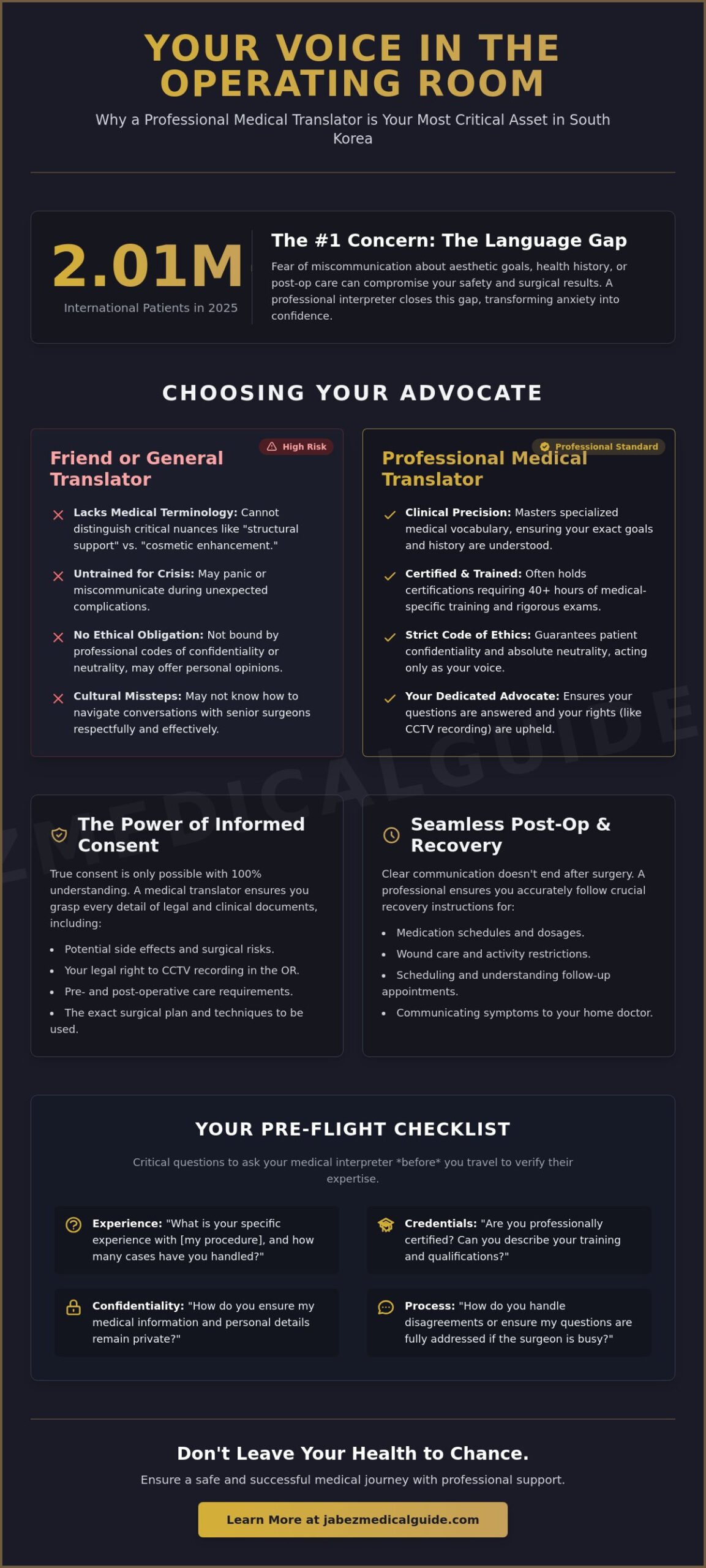
A medical translator korea serves as a vital clinical safety layer rather than a mere linguistic bridge. While South Korea’s medical infrastructure is world-class, the “language gap” remains the primary source of stress for the 2.01 million international patients who visited in 2025. This anxiety isn’t just about finding the right office. It’s the fear that a critical detail about your health history or surgical expectations will be lost in translation. Unlike a general guide, a professional medical interpreter functions as your dedicated advocate, ensuring every interaction is grounded in precision and transparency.
Why Conversational Korean is Not Enough
Relying on a friend or a general translator for a surgical consultation can be a risky decision. Daily conversation doesn’t prepare someone for understanding medical terminology used during a complex rhinoplasty or dental implant procedure. For instance, the nuance between specific surgical techniques can drastically alter your final appearance. If a translator misses the subtle distinction between “structural support” and “cosmetic enhancement,” the surgeon may proceed with a different plan than you intended. Beyond the words themselves, an expert understands Korean medical etiquette. They know how to facilitate a respectful yet firm dialogue with senior surgeons, ensuring your concerns are addressed without causing friction in a culture that highly values professional hierarchy.
The High Stakes of Informed Consent
Informed consent is a legal pillar of the South Korean healthcare system, but it’s only valid if you truly understand what you’re signing. In a cross-border context, this process often involves dense legal and clinical documents. Signing these forms without 100% clarity means you’re accepting risks you might not fully grasp. A qualified medical translator korea walks you through every clause of your consent forms, from potential side effects to your legal right to have CCTV recording in the operating room. They ensure that your specific questions are translated accurately so the surgeon can provide a direct response. This level of detail eliminates the guesswork that often leads to post-operative regret, replacing it with the confidence that you’ve made a truly informed choice for your body.
Medical Terms vs. Everyday Language: Why Professional Certification Matters
A common misconception is that being bilingual is enough to work as a clinical interpreter. In reality, a qualified medical translator korea undergoes specialized training that extends far beyond conversational fluency. They must master a strict Code of Ethics that prioritizes patient confidentiality and absolute neutrality. This means they don’t offer personal opinions; they ensure the surgeon’s clinical assessment is delivered to you without distortion. Many top-tier professionals seek professional certification for medical interpreters, which requires passing rigorous exams and completing at least 40 hours of medical-specific training. This preparation allows them to bridge different medical philosophies, such as varying cultural approaches to pain management or recovery timelines.
Professional interpreters are also trained to handle high-pressure environments. If an unexpected complication occurs during a procedure, a certified expert remains calm and focused. They provide the clear communication needed for the medical team and the patient to interact effectively. This specialized skill set is why a professional partner is superior to a casual guide or a friend who lacks the vocabulary to navigate a crisis.
The Anatomy of a Professional Medical Interpretation
Clinical interpretation isn’t a one-size-fits-all service. In a consultation, experts often use consecutive interpretation, where the speaker pauses to allow the translator to speak. This method ensures every detail is captured accurately. Before you even enter the clinic, a professional reviews your medical history and pre-operative tests to ensure they can translate your background with precision. Accuracy is particularly vital when discussing medication. A mistranslated dosage instruction or a misunderstood medication schedule can have serious health consequences. For those seeking a structured approach to their care, working with a specialist in plastic surgery coordination provides an extra layer of professional oversight for these critical details.
Confidentiality and the HIPAA-Equivalent Standards
Privacy is a major concern for international patients, especially when undergoing sensitive aesthetic or dental procedures. Professional agencies follow strict data protection protocols to ensure your health records and personal information remain secure. While an unverified freelancer might not have formal data handling procedures, an established agency treats your information with the same level of care you would expect in your home country. They prioritize:
- Secure storage of translated medical records and diagnostic images.
- Strict non-disclosure agreements for all staff involved in your care.
- Neutrality that prevents any conflict of interest between the patient and the clinic.
These standards protect your identity and your health history, allowing you to focus entirely on your recovery without worrying about who might see your files.
Comparing Your Options: Hospital Staff, Freelancers, or Agency Interpreters
Deciding which type of linguistic support to use is one of the most important choices you’ll make before your trip. Most patients encounter three main categories: hospital-provided coordinators, independent freelancers, or dedicated agency interpreters. While each has its place, the level of advocacy and clinical precision varies significantly between them. A professional medical translator korea from an agency operates with a different set of priorities than someone employed by the clinic where you’re receiving treatment.
Freelance translators are often praised for their flexibility, but they carry inherent risks regarding accountability. If an independent translator faces a personal emergency on the day of your surgery, you may be left without support at a critical moment. Without a formal agency structure, it’s also difficult to verify if they’ve completed the specialized Medical Interpreter Training in South Korea that prepares them for complex surgical environments. Agencies provide a vital safety net, ensuring a qualified backup is always available so your medical schedule remains uninterrupted.
The Hospital Coordinator: Convenience vs. Advocacy
Many large clinics include an international coordinator in their service package. These professionals are convenient for handling basic administrative tasks like scheduling and billing. However, it’s vital to remember that they’re hospital employees. This creates a potential conflict of interest if you have concerns about your care or wish to challenge a surgeon’s recommendation. These coordinators are also often incredibly busy, sometimes managing dozens of international patients simultaneously. They might not have the time to provide the deep, one-on-one attention you need during a stressful consultation or a long recovery period.
The Agency Advantage: Comprehensive Support
Choosing an agency like Jabez Medical Guide ensures your interests come first. Because we’re independent of the hospitals, our primary loyalty is to you, the patient. We provide a steady presence from your initial consultation through your final follow-up, offering the consistency that hospital staff simply can’t match. This relationship-based approach is a core part of our medical concierge seoul services. We don’t just translate words; we manage the logistics of your journey. Having a dedicated medical translator korea who understands your specific history and goals provides a level of peace of mind that administrative staff cannot replicate.
A Guide to Evaluating Your Medical Interpreter Before You Fly
Selecting a professional partner requires a methodical approach that begins long before you arrive at Incheon International Airport. While reviews on social media offer a glimpse into a person’s personality, they rarely confirm a professional’s clinical competency. You need a medical translator korea who understands the specific technicalities of your procedure, whether you’re visiting for hair restoration or complex dental work. Each medical field has its own vocabulary and set of risks. A compatibility call is an essential step to ensure your advocate’s communication style aligns with your needs and provides the reassurance you require.
Verification is a key part of this process. In South Korea, medical tourism facilitators are required to undergo a biennial re-certification process to ensure they meet government standards for safety and service. When you speak with a potential interpreter, ask about their experience with the Korean Accreditation Program for Hospitals Serving Foreign Patients (KAHF). Choosing a partner who understands these high standards ensures that your care is managed within institutions recognized for their quality. If you’re ready to secure a partner who prioritizes your safety and clarity, book a consultation with Jabez Medical Guide to discuss our professional coordination and recovery support services.
Five Essential Questions for Your Translator
To move beyond surface-level reviews, use these targeted questions during your initial interview:
- How many times have you interpreted for this specific surgical procedure in the last year?
- Are you an independent advocate, or do you have a financial relationship with the clinic?
- Does your service fee include post-operative visits, pharmacy trips, and assistance with medical visa documents?
- How do you ensure the accurate translation of my medical records for my doctors back home?
- What is your protocol if an emergency arises or if I’m unhappy with a consultation outcome?
A professional will answer these with transparency and detail. They should demonstrate a deep understanding of the administrative process as well as the clinical environment.
Red Flags to Watch Out For
Protecting your health means recognizing when a service provider isn’t acting in your best interest. Be wary of any medical translator korea who promises specific medical results or “guarantees” a certain look. No ethical professional can promise a clinical outcome. Another major red flag is an interpreter who pushes you toward a specific clinic by offering “exclusive discounts.” This often indicates a commission-based relationship that may compromise their neutrality. Finally, watch for a lack of transparency regarding their background. If they cannot clearly explain their training or their experience with international patient safety laws, they likely lack the specialized knowledge required for a complex healthcare journey.
Seamless Communication: Integrating Translation into Your Recovery
Many patients assume that once the procedure is finished, the need for high-level linguistic support vanishes. This is a dangerous oversight. The period immediately following surgery is when your body is most vulnerable and your need for clarity is highest. A professional medical translator korea serves as your primary link to the medical team during this sensitive time. They ensure that your pain levels are communicated accurately and that every follow-up instruction is captured with 100% precision. This level of support is a fundamental component of the korea medical tourism process, transforming a complex international journey into a manageable, step-by-step path to healing.
Accurate communication during recovery does more than just prevent errors; it actively reduces the psychological stress that can slow down the healing process. When you aren’t struggling to understand your nurse or worrying about your next dose of medication, your body can focus entirely on repair. Having a dedicated advocate who speaks your language and understands the clinical environment provides a steadying influence that makes the entire post-operative experience feel safe and predictable.
Post-Op Instructions and Pharmacy Visits
Understanding how to care for your surgical site is vital for preventing infection and ensuring the best aesthetic results. Your translator will sit with you as the nurse explains wound care, activity limits, and dietary restrictions. This is particularly important when navigating local resources. For example, knowing which korean food for surgery recovery is best for reducing swelling can significantly speed up your progress. At the pharmacy, your advocate ensures you understand exactly how and when to take your Korean prescriptions. They bridge the gap between the pharmacist’s instructions and your own comfort, leaving no room for error in your medication schedule.
Long-Term Success: Records for Your Home Doctor
Your healthcare journey doesn’t end when you board your flight home. For long-term safety, your doctor in your home country needs a complete and accurate record of what occurred during your time in Korea. A professional agency ensures that all discharge papers, surgical reports, and diagnostic images are accompanied by precise translations. Your medical translator korea verifies these documents before you leave the clinic, checking that every detail is present and correct. This meticulous attention to detail prevents future complications and ensures your local GP can provide seamless follow-up care. Safety starts with being understood, and professional translation is the final piece of the puzzle that secures your peace of mind.
Your Partner for a Safe and Successful Medical Journey
Navigating an international healthcare system requires more than just clinical excellence; it requires the certainty that your voice is heard at every stage. By choosing a dedicated medical translator korea, you move beyond basic communication and secure a clinical safety layer that protects your health. From the initial consultation where informed consent is established to the final follow-up where recovery instructions are clarified, professional advocacy is the key to your peace of mind.
Jabez Medical Guide acts as your reliable navigator, bridging the gap between world-class Korean medicine and your individual goals. We work exclusively with government-accredited partner institutions and provide certified medical interpreters who possess specialized surgical knowledge. Our commitment to your safety includes 24/7 patient advocacy and comprehensive support through every phase of your treatment and recovery.
Your health deserves the highest standard of precision and care. Secure your certified medical translator with Jabez Medical Guide today and begin your journey with absolute confidence. We’re here to ensure that your experience in South Korea is as seamless and stress-free as possible.
Frequently Asked Questions
Is a medical translator in Korea expensive?
Professional translation costs vary depending on the level of specialization and the duration of your care. Typical industry rates for on-site medical interpretation in 2026 range from 80,000 to 150,000 KRW for a half-day session, while full-day support usually ranges between 150,000 and 280,000 KRW. Investing in a professional ensures that you avoid the much higher costs associated with medical misunderstandings or surgical revisions.
Will my surgeon speak English if I don’t hire a translator?
Many Korean surgeons possess high levels of medical English proficiency, but technical nuances can still be lost in direct conversation. Surgeons often use English for academic literature rather than patient-facing explanations. Relying on partial English during a complex consultation increases the risk of miscommunicating your aesthetic goals or misunderstanding specific clinical risks, which can impact your final results.
What is the difference between a guide and a medical interpreter?
A guide focuses on general logistics and tourism, whereas a medical interpreter is trained in clinical terminology and patient safety protocols. Interpreters understand the legal requirements of informed consent and can navigate complex conversations about surgical techniques. A guide lacks the specialized vocabulary needed to explain a medical complication or translate a professional medical report for your doctor back home.
Can I use a translation app like Papago for my medical consultation?
Translation apps are not recommended for medical consultations because they cannot accurately capture clinical nuance or technical medical terms. Apps frequently misinterpret dosage instructions or surgical risks, which creates significant safety concerns. A human medical translator korea provides the situational awareness and accuracy that automated tools currently lack, ensuring your health is never left to an algorithm.
Does the Korean government certify medical translators for foreigners?
The Korean government requires medical tourism facilitators to be registered and undergo a biennial re-certification process to ensure safety and service quality. While there isn’t a single mandatory certification for all individual translators, reputable agencies work with professionals trained by the Korea Health Industry Development Institute (KHIDI). Patients should look for facilitators who adhere to the Ministry of Health and Welfare standards for international care.
Should I hire a translator for a simple dermatology treatment?
Even for non-invasive treatments, a translator ensures you understand the specific laser settings, potential side effects, and aftercare requirements. Dermatology was the most sought-after treatment in 2025, accounting for 62.9% of international patients. Misunderstanding post-treatment instructions, such as sun exposure rules or topical cream application, can negatively impact your skin’s healing process and the longevity of your results.
How far in advance should I book my medical translator in Korea?
You should ideally book your translation support at least two to four weeks before your scheduled arrival in South Korea. This timeframe allows your coordinator to review your medical history and synchronize with the clinic’s schedule. Booking early ensures you have a dedicated advocate reserved for your specific surgery dates and the critical recovery visits that follow your procedure.
Can my medical translator also help with my visa and hotel bookings?
Specialized medical tourism agencies provide comprehensive coordination that includes medical visa assistance and airport logistics alongside translation. This holistic approach ensures your administrative needs are met with the same precision as your clinical ones. Agencies like Jabez Medical Guide integrate medical translator korea services with recovery support and airport pick-up to create a seamless, stress-free healthcare journey.