

What if the most effective way to minimize post-operative swelling isn’t found in a pharmacy, but in a traditional Korean kitchen? You’ve likely invested significant time and resources into your procedure, so it’s natural to feel anxious about the bruising and digestive sluggishness that often follow anesthesia. Choosing the right korean food for surgery recovery is essential to ensure your body has the nutrients it needs without triggering unnecessary inflammation from salt or spice.
We understand that managing your own nutrition in a foreign country can feel daunting, especially when you’re focused on healing. This guide explains how traditional healing foods can accelerate wound closure and improve your energy levels. We’ll show you which staples align with the 2026 nutritional standards and how to use updated delivery apps to bring these recovery meals directly to your door. By the end of this article, you’ll have a clear, evidence-based plan to support a smooth and comfortable journey to your final results.
Key Takeaways
- Understand how specific nutrients serve as a metabolic foundation to manage inflammation and support cellular repair.
- Learn why pumpkin is considered the essential ingredient for naturally reducing post-operative swelling and edema.
- Discover the benefits of protein-rich seaweed soup for rebuilding tissue and restoring vital mineral balance.
- Follow a structured seven day timeline to transition safely from gentle hydration to nutrient-dense recovery meals.
- See how specialized recovery support manages the logistics of sourcing korean food for surgery recovery for a stress-free healing process.
The Role of Post-Operative Nutrition in Korean Recovery
Post-operative nutrition serves as the metabolic foundation for cellular repair. It isn’t merely about feeling full; it’s about providing the specific biological components your body needs to knit tissue back together. When you undergo a surgical procedure, your body enters a state of hyper-metabolism. It triggers a systemic inflammatory response that consumes your internal reserves of protein, vitamins, and minerals. Selecting the right korean food for surgery recovery ensures that your body doesn’t have to pull these resources from healthy tissue, which can lead to fatigue and delayed healing.
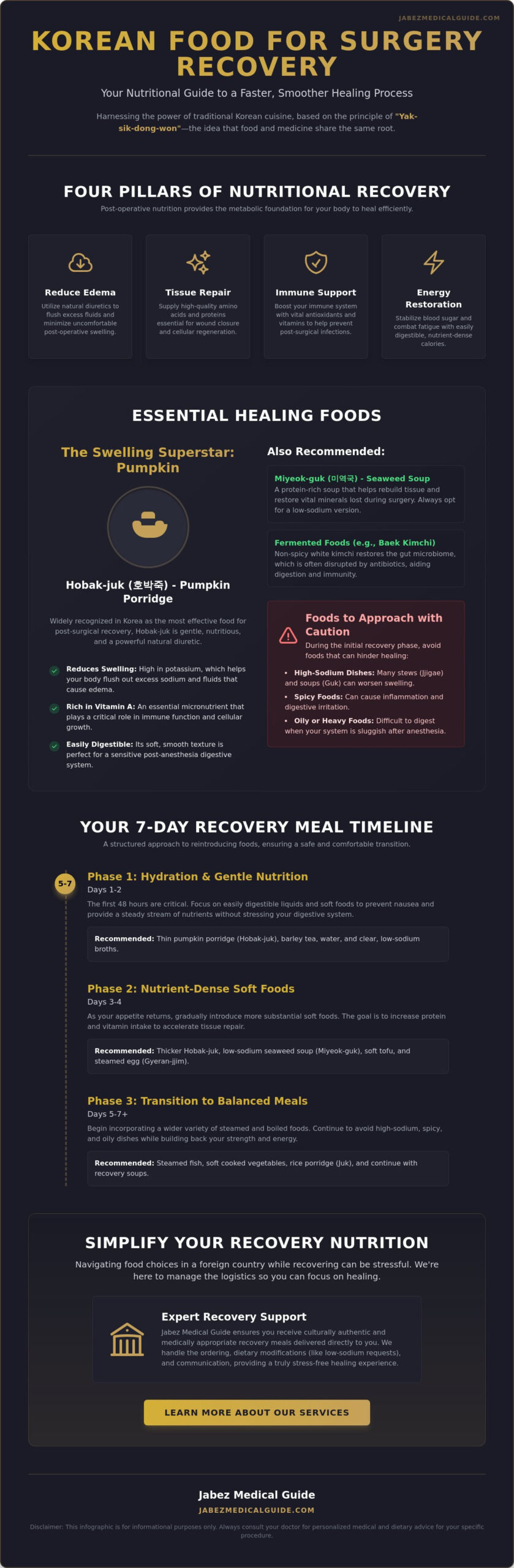
This clinical need for nutrition is deeply embedded in the local culture through the concept of “Yak-sik-dong-won.” This philosophy suggests that food and medicine share the same root. In a modern medical context, this means your recovery meals are an extension of your surgical treatment. By prioritizing specific ingredients, you focus on four primary recovery goals:
- Reducing Edema: Using natural diuretics to flush out excess fluids.
- Tissue Repair: Providing high-quality amino acids for wound closure.
- Infection Prevention: Supporting the immune system with antioxidants.
- Energy Restoration: Stabilizing blood sugar levels after the stress of anesthesia.
Combating Metabolic Stress After Surgery
Surgery and anesthesia often leave the digestive system in a fragile state. The physical trauma of an operation can cause digestive sluggishness, making it difficult to process heavy or oily foods. The first 48 hours post-op are particularly sensitive. During this window, the risk of minor malnutrition is surprisingly high because many patients feel too nauseated to eat. To combat this, you must focus on easily digestible, nutrient-dense calories. Small, frequent portions of soft foods are more effective than large meals. This steady intake prevents energy crashes and provides a constant stream of repair materials to the surgical site.
Why Traditional Korean Cuisine is Ideally Suited for Healing
The inherent structure of Korean cuisine is exceptionally well-suited for a recovering body. Unlike many diets that rely on heavy fats or dairy, traditional Korean dishes are predominantly steamed, boiled, or fermented. This low-oil approach prevents digestive upset while keeping the focus on high-quality ingredients. Fermented foods are especially valuable. They help restore the gut microbiome, which is often disrupted by post-surgical antibiotics.
Additionally, the tradition of using “cooling” ingredients helps manage the internal “heat” associated with inflammation. By choosing specific korean food for surgery recovery, you’re not just eating for sustenance. You’re using a time-tested culinary system designed to balance the body’s response to trauma. This methodical approach to eating allows you to navigate the early stages of recovery with confidence and physical comfort.
Korean Foods for Reducing Swelling and Edema
Managing post-operative swelling is often the primary concern for patients recovering from plastic surgery or dental procedures in Seoul. Edema, or the accumulation of fluid in tissue, is a natural response to surgical trauma. It can be uncomfortable and often obscures your initial results during the first few weeks. Choosing the right korean food for surgery recovery can significantly influence how quickly this fluid is reabsorbed by your body. While rest and compression are vital, certain traditional ingredients act as natural catalysts for fluid drainage.
It’s vital to exercise caution with certain popular dishes during this phase. Many Korean stews and soups are high in sodium, which can actually worsen edema by causing the body to hold onto water. When you’re using delivery apps like Coupang Eats, look for “low-sodium” options or stick to porridges that aren’t seasoned with heavy salt. If navigating these dietary choices feels overwhelming while you’re focused on healing, utilizing recovery support services can ensure your meals are both culturally authentic and medically appropriate for your specific procedure.
The Science of Hobak-juk (Pumpkin Porridge)
Pumpkin, or *Hobak*, is widely recognized in Korea as the most effective ingredient for post-surgical recovery. Its high concentration of Vitamin A and potassium helps regulate fluid balance and encourages the kidneys to flush out excess sodium. Clinical studies on Pre- and Post-Surgical Nutrition emphasize that maintaining these micronutrient levels is essential for stabilizing the body’s internal environment during the healing process.
The texture of *Hobak-juk* is particularly beneficial for patients who’ve undergone jaw reduction, rhinoplasty, or dental surgery. It’s soft, easy to swallow, and requires no chewing. This reduces strain on facial incisions and prevents jaw fatigue. For those traveling between clinic check-ups, pumpkin juice serves as a convenient, portable supplement that provides the same anti-inflammatory benefits in a concentrated liquid form.
Other Diuretic Powerhouses: Red Beans and Corn Silk
While pumpkin is the most famous option, other traditional staples offer powerful detoxifying properties. *Pat-juk*, or red bean porridge, is another excellent korean food for surgery recovery. Red beans are rich in saponins, which act as natural diuretics to reduce swelling in the limbs and face. They provide a heartier alternative to pumpkin when you need more sustained energy.
Hydration is equally critical during the first week of healing. *Oksusu-suyeom-cha*, also known as corn silk tea, is a staple in Korean recovery protocols because it supports kidney function without the dehydrating effects of caffeine. Corn silk tea is a caffeine-free diuretic that provides gentle hydration while actively working to minimize water retention. It’s an ideal replacement for plain water if you’re struggling with post-op bloating.
Essential Korean Dishes for Tissue Repair and Vitality
While reducing swelling is a priority in the immediate days following a procedure, the focus of your diet must soon shift toward structural repair. Protein and minerals act as the primary building blocks for new skin, muscle, and connective tissue. Without an adequate supply of these micronutrients, the healing process can stall, increasing the risk of visible scarring or prolonged fatigue. Integrating specific korean food for surgery recovery ensures your body has a steady stream of amino acids and minerals to support cellular regeneration.
The metabolic demands of healing are significantly higher than your baseline requirements. Your body needs iron to restore blood volume and iodine to support the thyroid gland, which regulates the metabolic rate necessary for tissue growth. Traditional Korean “healing” dishes are designed to deliver these elements in a highly bioavailable format. By choosing nutrient-dense soups and stews, you provide your system with the energy it needs to move past the initial trauma of surgery and into a state of active vitality.
Miyeok-guk: The Ultimate Recovery Superfood
Often referred to as “birthday soup,” *Miyeok-guk* is perhaps the most culturally significant korean food for surgery recovery. Beyond its symbolic value, brown seaweed is a powerhouse of iodine and calcium. Iodine is particularly vital after general anesthesia, as it supports the thyroid’s role in clearing toxins from the blood and stabilizing your metabolism. The calcium found in seaweed also assists in blood clotting and bone health, which is essential for dental or orthopedic procedures. To maximize the repair potential of this dish, we recommend versions that include lean beef or abalone. These additions provide the high-quality protein needed for collagen production and wound closure.
Samyetang and Bone Broths for Collagen Support
For patients experiencing a dip in energy levels, *Samyetang*, or ginseng chicken soup, serves as a potent energy-boosting tonic. The inclusion of whole young chicken provides a complete amino acid profile, while the ginseng improves peripheral circulation, ensuring that nutrients reach the surgical site efficiently. Medicinal herbs like jujubes and ginger are often added to these broths to soothe the digestive system and reduce internal oxidative stress.
Slow-cooked bone broths, such as *Seolleongtang*, are equally beneficial for collagen synthesis. These broths are rich in glycine and proline, amino acids that are directly used by the body to reconstruct damaged tissue. Navigating these specialized menus can be complex while you are in a vulnerable state. Many patients find that a medical concierge in Seoul can help coordinate these meals, ensuring that each dish is prepared with the correct medicinal balance and delivered to your recovery suite at the optimal time.
Your 7-Day Korean Recovery Meal Timeline
Recovery isn’t a single event; it’s a methodical progression that requires patience and precise planning. The first week after your procedure is the most critical window for managing metabolic stress and ensuring your body has the resources for cellular repair. By following a structured timeline, you can transition safely from basic hydration to nutrient-dense solids without overwhelming your digestive system. This phased approach helps you reach the milestones outlined in our guide to post-op care services korea with greater physical comfort.
Nausea is a common side effect in the first 24 hours due to the lingering effects of anesthesia. To manage this, focus on small, frequent sips of room-temperature liquids rather than large gulps. Avoid foods with strong aromas during this initial window, as your sensory system may be heightened. If you find it difficult to source these specific meals while resting, our professional coordination services can arrange for appropriate recovery dishes to be delivered directly to your accommodation.
Days 1-2: Clear Liquids and Soft Porridges
Hydration is your first priority. Start with clear broths and pumpkin juice to flush out anesthesia byproducts and begin addressing edema. *Juk*, or rice porridge, is the gold standard for early korean food for surgery recovery because it’s exceptionally gentle on the stomach. We recommend plain rice porridge (*Huim-juk*) or pumpkin porridge (*Hobak-juk*) during these 48 hours. It’s also wise to avoid dairy products if your surgeon has prescribed certain antibiotics, as calcium can interfere with the absorption of medications like Doxycycline or Ciprofloxacin.
Days 3-5: Nutrient-Dense Soft Foods
Once your appetite returns, shift your focus to “nutrient loading” to support tissue repair. This is the ideal time to introduce *Miyeok-guk* (seaweed soup) and *Dubu-jim* (steamed tofu). These dishes provide high-quality protein and essential minerals without requiring significant chewing effort. Soft-boiled eggs or steamed white fish are also excellent choices for easily absorbable protein. To support collagen synthesis, include Vitamin C-rich side dishes like lightly blanched spinach or bean sprouts, which are staples of korean food for surgery recovery.
Day 6 and Beyond: Returning to Balanced Solids
By the end of the first week, most patients can begin returning to balanced solids. Focus on lean meats like boiled chicken and incorporate fermented foods to restore your gut flora. Mild, non-spicy Kimchi or *Baek-kimchi* (white kimchi) provides probiotics that are essential after a cycle of post-op antibiotics. Maintaining a high fiber intake through cooked vegetables is also important for preventing post-operative constipation, a common side effect of pain medications. This transition marks the move from acute healing to long-term vitality and aesthetic refinement.
How a Medical Facilitator Simplifies Your Recovery Nutrition
Sourcing the right meals in a foreign city while managing post-surgical fatigue is a major logistical hurdle. While you now know which dishes support healing, the practical task of procuring high-quality korean food for surgery recovery requires local expertise and specialized coordination. A medical concierge in Seoul acts as your dedicated navigator, bridging the gap between clinical nutritional needs and the daily reality of meal procurement. This professional support ensures your focus remains entirely on rest rather than navigating digital interfaces or deciphering ingredient labels.
Safety is a primary concern during the healing phase. Working with a medical translator in Korea is essential when communicating specific dietary needs or severe allergies to kitchen staff. Misinterpreting a single ingredient can lead to inflammatory reactions or digestive distress that complicates your recovery. Proper nutrition is a foundational pillar of the korea medical tourism process, ensuring that your journey is as comfortable as it is successful. By integrating dietary management into your broader care plan, you eliminate the stress of self-advocacy in a language you may not speak fluently.
Customizing Recovery Meals for Dietary Restrictions
Facilitators work closely with specialized recovery hotels to provide menus tailored to your specific surgical needs. This coordination is particularly valuable for patients with vegan, gluten-free, or halal requirements. While traditional Korean cuisine is often naturally healthy, many dishes contain hidden ingredients like shrimp paste or soy sauce with gluten. Our team manages the vetting process, verifying the hygiene standards and ingredient purity of every kitchen we recommend. This meticulous attention to detail ensures that your korean food for surgery recovery aligns perfectly with your lifestyle and medical requirements.
Seamless Logistics: From Hospital to Hotel Table
Modern technology has simplified food access, but a dedicated agency provides a level of reliability that apps alone cannot match. While 2026 updates have made local delivery apps more accessible to international visitors, a facilitator manages the timing and quality control of every order. This includes coordinating grocery deliveries for specific snacks or managing meal prep services that follow your 7-day timeline. If you experience late-night hunger or sudden nausea, having a partner to assist with nutritional needs provides immense peace of mind. We encourage you to view nutrition not as an afterthought, but as a core component of your comprehensive recovery support package.
Your Path to a Radiant and Comfortable Recovery
Recovering from surgery is a journey that extends well beyond the operating room. By prioritizing specific korean food for surgery recovery, you provide the essential fuel your body needs for efficient tissue repair and edema reduction. Traditional staples like pumpkin porridge and seaweed soup aren’t just cultural traditions; they are nutritionally dense tools designed to stabilize your metabolism and restore your vitality. When you align your diet with your body’s healing phases, you significantly improve your comfort and energy levels.
Navigating these dietary choices while healing requires organization and local expertise. Jabez Medical Guide offers 24/7 personal recovery assistance and maintains partnerships with accredited recovery hotels to manage every detail of your stay. Our certified medical interpreters ensure clear communication with staff to protect your safety and support your specific nutritional needs. You deserve a recovery experience that is as meticulous and refined as your surgical results. Contact Jabez Medical Guide for a Personalized Recovery Plan today and let us support your smooth transition to your final results.
Frequently Asked Questions
Is Korean food too spicy to eat after surgery?
No, many traditional healing dishes are specifically prepared to be mild and soothing. While some street foods are known for their heat, recovery staples like Juk (rice porridge) and Miyeok-guk (seaweed soup) are non-irritating and gentle on the digestive system. You should avoid spicy dishes for at least the first week to prevent inflammation and potential digestive upset while your body is in its most sensitive state.
Can I drink coffee or tea during my recovery in Korea?
You should generally avoid caffeinated coffee and green tea during the initial healing phase. Caffeine can lead to dehydration and may disrupt the restorative sleep necessary for tissue repair. Instead, opt for Oksusu-suyeom-cha (corn silk tea), which is a caffeine-free alternative. This traditional tea supports kidney function and helps your body process excess fluids more efficiently without the jittery side effects of stimulants.
What is the best Korean food to reduce swelling fast?
Pumpkin porridge, known as Hobak-juk, is the most effective korean food for surgery recovery for reducing edema. The high potassium content in pumpkin helps your body flush out excess sodium and fluids that accumulate after trauma. Red bean porridge is another excellent choice because it contains natural diuretics that help minimize facial and body swelling during the first few days post-op.
How do I explain my food allergies to Korean restaurants?
Using a written translation card or a professional medical translator in Korea is the safest way to communicate allergies. Many local dishes contain hidden ingredients like shrimp paste, sesame oil, or soy-based gluten that may not be obvious on a menu. A specialized coordination service can vet restaurants and communicate directly with kitchen staff on your behalf. This ensures your safety and prevents accidental exposure to allergens during your recovery.
Should I avoid Kimchi because of the high salt content?
You should avoid traditional red Kimchi in the early days of recovery due to its high sodium and spice levels. Excessive salt can lead to water retention and worsen post-operative swelling. However, Baek-kimchi (white kimchi) is an excellent alternative. It is fermented without chili powder and has a much lower salt profile, providing the probiotics your gut needs after a course of antibiotics without causing inflammation.
Are there vegetarian Korean foods that are good for recovery?
Yes, several vegetarian options provide excellent nutritional support for healing. Pumpkin porridge and steamed silken tofu are nutrient-dense choices that are easy to digest. You can also request seaweed soup made with a vegetable or mushroom base rather than the traditional beef stock. These plant-based options offer the necessary vitamins and minerals to support cellular repair while adhering to your dietary preferences.
Can my medical facilitator arrange for specific recovery meals to be delivered?
Yes, your coordination team can manage the logistics of sourcing and delivering the right korean food for surgery recovery. Navigating local delivery apps like Coupang Eats can be difficult without a local phone number or bank account. A facilitator can bridge this gap by ordering specific, nutrition-aligned meals from trusted providers. This service ensures you receive consistent, high-quality nourishment without having to leave your recovery suite.
What should I eat if I have had jaw or dental surgery?
Stick to a “no-chew” diet consisting of smooth porridges, chilled pumpkin juice, and soft silken tofu. These foods provide essential calories and micronutrients without putting any physical strain on your incisions or jaw joints. Chilled liquids can also provide a soothing effect on localized swelling. As your comfort improves, you can slowly transition to very soft solids like steamed eggs or well-cooked mung bean porridge.