

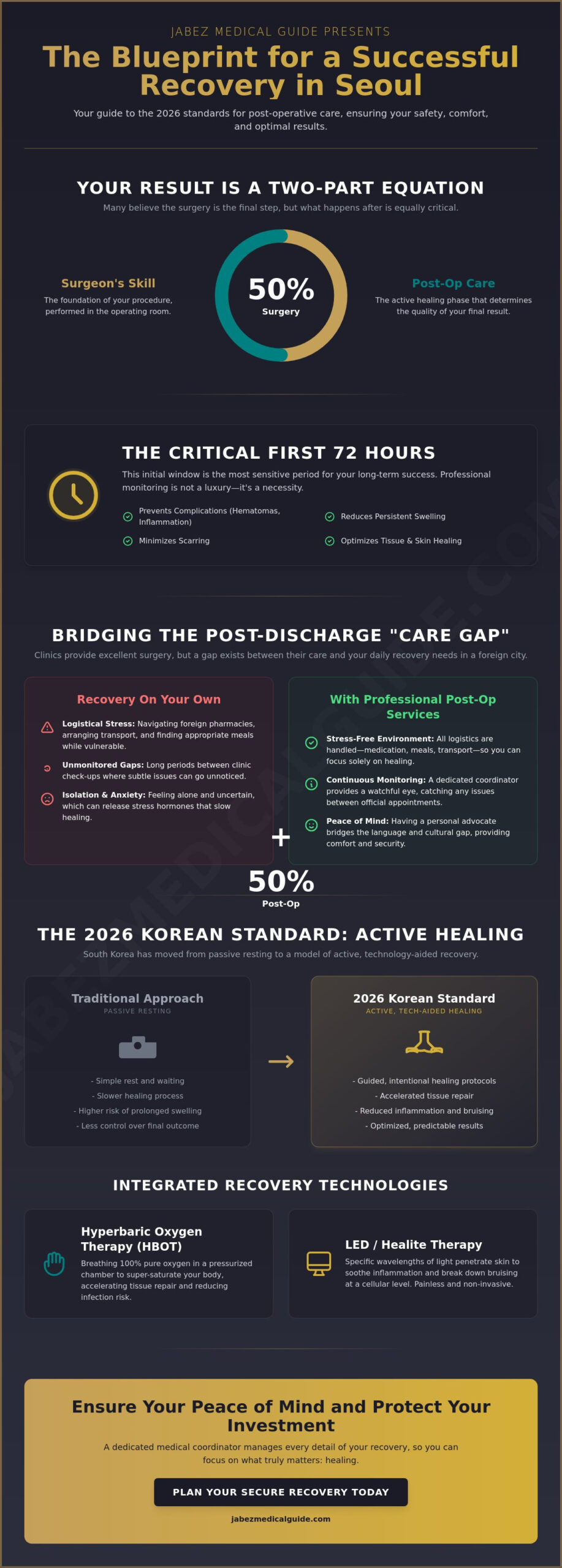
The success of your procedure in Seoul depends as much on what happens after you leave the operating room as it does on the surgeon’s skill. Many international patients believe the surgery is the final step, but your recovery period actually determines 50% of your final result. Utilizing professional post-op care services korea provides the steadying influence you need to protect your surgical investment. It’s natural to feel a sense of uncertainty about navigating a different medical system while you’re in a vulnerable state, especially when you’re far from home and managing your own care.
You deserve to focus entirely on healing without the stress of language barriers or logistical confusion. This guide will show you how a structured recovery plan ensures your safety and comfort through every stage of the process. We’ll explore the updated 2026 standards for aftercare, including the streamlined C-3-3 medical visa process and the essential steps for managing your medication and nutrition. By the end of this article, you’ll have a clear roadmap for a secure, organized, and well-monitored recovery journey that prioritizes your peace of mind.
Key Takeaways
- Learn why the first 72 hours following your procedure are the most critical for long-term success and how professional monitoring ensures you’re on the right path.
- Discover the 2026 standard for post-op care services korea, where active, technology-driven treatments replace traditional passive resting for better results.
- Identify the essential logistical steps, from pharmacy navigation to meal delivery, that create a stress-free environment for your physical healing.
- Follow a comprehensive 14-day timeline that integrates both medical milestones and the practical support needed for a seamless stay in Seoul.
- Understand how a dedicated medical coordinator acts as your personal advocate, managing the complex details so you can focus entirely on your recovery.
Understanding Post-Op Care Services in Korea for International Patients
In the South Korean medical model, recovery is viewed as an active phase of the surgical procedure itself. Post-op care is a multi-disciplinary approach to healing that combines clinical monitoring, physical therapy, and nutritional support to ensure the body stabilizes correctly. While the surgeon’s work is completed in the operating room, the first 72 hours following the procedure are the most sensitive period for long-term success. During this window, the risk of minor issues like hematomas or inflammation is highest. Professional post-op care services korea provide the watchful eye needed to catch these signs early, preventing them from developing into complications that could compromise your results.
International patients often face unique hurdles that local residents don’t have to consider. Navigating a foreign pharmacy system or feeling isolated in a hotel room can create significant anxiety. These stresses can trigger cortisol spikes that actually slow down the healing process. Having a dedicated support system helps bridge the gap between the clinical environment and your temporary home in Seoul, ensuring that your recovery environment is as controlled and supportive as the surgery itself.
The Critical Role of Aftercare in Surgical Outcomes
Consistent monitoring does more than just prevent emergencies; it actively shapes how you heal. Structured recovery protocols are proven to reduce persistent swelling and minimize the appearance of scars by ensuring the skin and tissues receive optimal circulation. As Medical tourism in South Korea continues to grow, the industry has shifted toward standardized recovery milestones. Having a professional verify your progress against these benchmarks provides a level of safety that is difficult to achieve alone. It’s about moving beyond simple rest and into a phase of guided, intentional healing where every day is optimized for the best possible outcome.
Why Clinical Care Alone May Not Be Enough
Most clinics provide excellent surgical results but aren’t designed to manage your daily life once you’re discharged to your hotel. This creates a “care gap” where you might find yourself alone in a foreign city, struggling to interpret medication instructions or order appropriate meals that won’t interfere with your recovery. Basic clinical check-ups occur only every few days, leaving long stretches where you aren’t being monitored for subtle changes in your healing. A medical concierge acts as the bridge in this gap, providing the post-op care services korea that clinics often lack. They handle the logistics of pharmacy visits and transport, ensuring you don’t have to navigate complex systems while your body is in a vulnerable state. This partnership ensures that the high standard of care you received in the clinic continues until you’re ready to fly home.
The Korean Standard: Advanced Recovery Technologies and Treatments
In South Korea, the recovery process is treated with the same clinical precision as the surgery itself. By 2026, the industry has fully transitioned from “resting and waiting” to a model of active, technology-aided healing. While many countries view specialized recovery tools as elective luxuries, post-op care services korea integrate these as essential components of the standard medical protocol. This infrastructure is bolstered by official support for medical tourists, ensuring that international patients have access to the same high-tech environment as local residents. You aren’t just left to heal; you’re given the tools to heal faster.
Hyperbaric Oxygen Therapy (HBOT) and Light Therapy
Hyperbaric Oxygen Therapy has become a cornerstone of the Korean recovery experience. By placing the patient in a pressurized chamber with 100% pure oxygen, the body’s oxygen saturation levels increase significantly. This process accelerates tissue repair and reduces the risk of infection by revitalizing blood flow to surgical sites. Most patients begin these sessions within the first 48 hours post-op to maximize the benefits. Complementing this is LED or Healite therapy. These specific wavelengths of light penetrate deep into the skin layers to soothe inflammation and break down bruising at a cellular level. It’s a painless, non-invasive way to visibly speed up the healing timeline.
Deswelling Treatments and Lymphatic Drainage
Managing edema is a priority in the days following a procedure. Specialized Radio Frequency (RF) treatments are frequently used to stimulate collagen and promote skin tightening, which is especially beneficial after liposuction or facial contouring. For those undergoing breast surgery, ultrasound treatments play a vital role in keeping tissues soft and preventing complications like capsular contracture. Specialists also utilize targeted “deswelling injections” strategically to address localized swelling that doesn’t respond to massage alone. These interventions ensure that your final results emerge more quickly and cleanly. To navigate these various treatment options effectively, many patients choose to work with a dedicated recovery support service that coordinates these appointments seamlessly.
The accessibility of these treatments is a major advantage of recovering in Seoul. In many Western countries, accessing a hyperbaric chamber or specialized RF massage requires separate referrals and high out-of-pocket costs. In Korea, these services are often located within the same building or managed through coordinated care networks. This centralized approach reduces the physical strain on the patient and ensures that every aspect of your recovery is monitored by professionals who understand the specific nuances of your surgery.
Beyond the Clinic: Essential Logistics for a Seamless Recovery
The mental energy required to manage daily life in a foreign country shouldn’t be underestimated, especially when you’re physically recovering from surgery. While the clinical outcome is your primary focus, the environment where you spend your first two weeks determines how quickly you return to your normal routine. High-quality post-op care services korea provide more than just medical check-ups; they remove the logistical friction that can cause stress and hinder the body’s natural healing process. Referencing our Comprehensive Guide to Korean Plastic Surgery will help you understand the initial planning stages, but the logistics of the stay itself require a separate, meticulous strategy.
Coordination becomes even more critical for patients who choose to combine procedures across different specialized centers, such as receiving a hair transplant in Korea at one clinic and dermatology treatments at another. Managing multiple follow-up schedules and medication protocols alone is a significant burden. Professional logistics coordination allows you to focus solely on resting while an expert navigator handles the “moving parts” of your stay. Korea’s advanced medical technology and patient services have made it a global leader, but accessing these benefits requires a bridge between the clinical world and your daily needs. Understanding the full korea medical tourism process — from hospital selection and legal rights to visa logistics and recovery coordination — ensures you arrive fully prepared for every stage of your journey.
Professional Medical Translation and Advocacy
Communication is the most common source of anxiety for international patients. A professional medical translator in Korea is vital for follow-up consultations where subtle details matter. You need to be able to describe specific sensations, such as a localized tightness or a particular type of discomfort, and understand exactly how the surgical team responds. Translation in a medical context isn’t just about converting words; it’s about clinical advocacy. Having bilingual support ensures that no nuance is lost in translation and that you feel heard and understood by your medical team at every milestone.
Recovery Nutrition and Daily Essentials
Proper nutrition is a pillar of the 2026 Korean recovery standard. Traditional foods like pumpkin porridge (hobak-juk) are widely used for their natural deswelling properties and ease of digestion. However, digital infrastructure in Seoul often creates a “digital wall” for tourists. Most local food delivery and grocery apps require a Korean phone number and a resident ID for verification. This makes it nearly impossible for a recovering patient to order essentials from their hotel room. Concierge-led post-op care services korea solve this by handling everything from medication pick-ups to sourcing specific recovery-friendly meals. This ensures your body gets the fuel it needs without you having to navigate complex local systems while in a vulnerable state.
Your Recovery Timeline: What to Expect During Your Stay
Planning for a 14-day stay in Seoul is the standard recommendation for most international patients. This timeframe allows enough room to complete the most sensitive phases of healing and ensures you are physically ready for the journey home. While every individual heals at a different pace, following a structured timeline helps manage your energy expectations and ensures no medical milestone is missed. Integrating professional post-op care services korea into this schedule provides the necessary oversight to move through each stage with confidence.
The First 48 Hours: Intensive Support
The transition from the surgery center to your recovery hotel is the most critical logistical step. During these first two days, your mobility will be limited and your energy levels will be at their lowest. Pain management protocols are strictly followed during this window, and regular check-ins ensure that your initial recovery is stable. A concierge service typically manages the “arrival” logistics, including transport from the clinic and ensuring your recovery space is stocked with necessary supplies. This intensive support phase is designed to keep you comfortable and stationary while the body begins the primary inflammatory response.
Days 3–7: The Deswelling Phase
Swelling usually peaks around the third or fourth day before beginning to subside. Your schedule during this week will involve frequent clinic visits for dressing changes and the advanced light therapies discussed earlier. You’ll likely transition from a strictly liquid diet to soft recovery foods that are easy to digest. Light walking is encouraged during this phase to promote healthy circulation and prevent blood clots, though strenuous activity remains restricted. Consistent post-op care services korea are essential here to monitor the reduction of edema and ensure that your incisions are healing cleanly without signs of irritation.
Week 2: Final Checks and Departure Prep
The second week focuses on preparing you for international travel. Suture removal usually occurs between day 7 and day 10, marking a major milestone in your recovery. This is followed by a final consultation with your surgeon to verify that you’ve met all healing benchmarks. You’ll receive a “Fit to Fly” certification and a detailed checklist for care once you return home. Airport transfer logistics are coordinated to ensure your departure is as smooth and physically undemanding as possible. To ensure every step of this 14-day journey is managed professionally, you can book a comprehensive recovery support package with our team.
Navigating Your Recovery with Jabez Medical Guide
Choosing the right partner for your healing journey is as significant as selecting your surgeon. Jabez Medical Guide acts as your objective advocate, ensuring that your health and comfort remain the primary focus throughout your stay. Our end-to-end support model integrates every clinical and logistical detail, from the moment you land until your final departure. For patients managing complex cases across multiple accredited hospitals, we provide a centralized point of contact to synchronize your various follow-up appointments and medication schedules. This holistic approach to post-op care services korea ensures that your healing process remains seamless and never feels fragmented.
Your safety is our priority. With the 2026 standard requiring CCTV in all operating rooms and stricter regulations on clinic certifications, the medical landscape is safer than ever. However, navigating these legal rights and professional standards requires an expert who understands the system from the inside. We provide the steadying influence you need, acting as a bridge between high-end Korean medical facilities and your individual needs. Our goal is to provide a sense of reliability that allows you to rest with total peace of mind.
The Benefits of an Independent Medical Concierge
The primary advantage of working with an independent medical concierge seoul is the loyalty of your coordinator. Unlike clinic-based staff, our team members aren’t clinic employees; they’re your personal representatives. This independence is vital if you face unexpected stay extensions or require mediation with a medical team. Our “Premium Concierge Package” is designed to offer a personalized, high-touch experience where every detail of your recovery environment is curated for ease. Whether it’s managing emergency adjustments to your itinerary or ensuring your specific dietary needs are met, we provide the meticulous attention to detail that a busy clinic might overlook.
How to Get Started with Your Recovery Plan
Integrating our professional support into your surgical journey is a straightforward, methodical process. We recommend starting your coordination early to secure the most recovery-friendly accommodations and to allow ample time for our medical visa assistance services. By 2026, the streamlined C-3-3 medical tourism visa process has made entry much faster, but professional verification of your documentation remains essential for a smooth arrival. Your journey to a successful result begins with a consultation where we align our recovery support services with your specific surgical plan. Plan your safe recovery with Jabez Medical Guide today to ensure your path to healing is as organized as it is comfortable.
Securing Your Surgical Results with Expert Support
Your journey toward a successful transformation doesn’t end when you leave the clinic. The modern standard for post-op care services korea emphasizes active, technology-aided healing that protects your surgical investment. By coordinating professional logistics, such as specialized nutrition and transport, you remove the unnecessary stress that can hinder your body’s natural recovery process. This structured approach ensures that the first 14 days of your stay are optimized for the best possible outcome.
Partnering with a guide that utilizes government-approved and accredited partner hospitals provides the steadying influence you need in a foreign environment. With 24/7 dedicated personal assistance and certified professional medical interpreters, you can communicate your needs clearly and receive the attentive care you deserve. This level of meticulous organization acts as a bridge between the clinical excellence of Seoul and your personal comfort. It’s about ensuring that every step of your journey is managed with precision and empathy.
Ensure a safe and comfortable recovery with Jabez Medical Guide and move forward with the confidence that your healing process is in expert hands. You’ve made a significant investment in your well-being; let’s work together to ensure your results are everything you envisioned.
Frequently Asked Questions
Is post-op care included in the price of surgery in Korea?
Basic medical follow-up appointments, such as suture removal and dressing changes, are typically included in your surgical fee. However, comprehensive post-op care services korea that involve concierge support, specialized deswelling treatments, and logistical coordination are usually separate services. You should verify with your clinic exactly which clinical milestones are covered to ensure you have a complete plan for your recovery period.
Can I recover alone in a hotel in Korea after plastic surgery?
While recovering alone is possible, it’s not recommended for international patients during the first few days when energy levels are low. Simple tasks like managing medication, ordering appropriate food, and getting out of bed can be physically demanding and stressful without assistance. Having a dedicated support system ensures your safety is monitored and allows you to focus entirely on resting without the burden of daily logistics.
How long should I stay in Korea for post-operative care?
A stay of 10 to 14 days is the standard recommendation for most surgical procedures. This duration covers the most critical phases of healing and ensures you are present for the final suture removal, which generally occurs between day 7 and day 10. Staying for this full period allows your surgeon to confirm you are stable and “Fit to Fly” before your international departure.
What happens if I have a complication after returning home?
You should immediately contact your surgical team and your medical coordinator to report any unusual symptoms. While minor concerns can often be addressed through telehealth, having a clear record of your post-op care services korea helps local doctors understand your recovery history. It is essential to follow the specific post-departure care checklist provided by your surgeon to minimize risks once you return home.
Do I need a special visa for a long-term recovery stay in Korea?
The C-3-3 medical tourism visa is the appropriate choice for patients and has been streamlined in 2026 for faster approval. This visa is designed for those seeking medical treatment and can be extended if your recovery requires a longer stay than initially planned. You should check the current requirements for your specific country to ensure all documentation is verified before your arrival.
What kind of food is best for recovery after surgery in Korea?
Pumpkin porridge, known locally as hobak-juk, is highly recommended for its natural ability to reduce swelling and its ease of digestion. High-protein, low-sodium meals are also essential for tissue repair and managing water retention. Relying on traditional recovery foods helps provide the necessary nutrients for healing while being gentle on your system during the early stages of your recovery.
How does a medical concierge help with pharmacy prescriptions?
A medical concierge handles the entire pharmacy process, including the physical pick-up of medications and the precise translation of dosage instructions. They ensure you understand exactly when and how to take each medication, which is vital for pain management and preventing infection. This support is especially helpful in navigating local pharmacies where language barriers might otherwise lead to confusion regarding your prescriptions.
Can Jabez Medical Guide help if I have already booked my surgery?
Yes, our services can be integrated into your journey even if your surgery is already scheduled with a clinic. We can step in to coordinate your recovery support services, airport transfers, and medical translation for your follow-up appointments. Contacting us as soon as possible allows for the most thorough organization of your logistics, ensuring a seamless transition from the clinic to your recovery space.