

What if your expensive eye creams aren’t failing because of the formula, but because they’re treating the wrong cause entirely? It’s incredibly frustrating to invest time and money into products that never seem to erase that tired look. You aren’t alone in this struggle; in fact, many individuals prioritize professional dermatological solutions to address these exact concerns. Seeking a professional dark circle treatment is the most effective way to move past the guesswork and access specialized care that actually works.
We understand that planning advanced medical care can feel overwhelming. This guide simplifies the process by helping you identify your specific under-eye type and the most advanced rejuvenation options available in 2026. You’ll learn how to understand treatment processes and what to expect from high-quality providers. Jabez Medical Guide provides a methodical roadmap to help you verify clinic quality and coordinate your care, ensuring your journey toward brighter eyes is both safe and meticulously organized.
Key Takeaways
- Identify the root cause of your under-eye concerns using simple self-diagnostic techniques like the “Pinch Test” to distinguish between skin thinning and pigmentation.
- Compare the full spectrum of dark circle treatment seoul options, ranging from minimally invasive skin boosters to long-term surgical solutions tailored to your anatomy.
- Learn how to structure your medical journey effectively, including the critical steps of arranging virtual consultations and managing your recovery timeline.
- Understand how professional dermatology treatment management protects you from “ghost doctors” by ensuring you receive care from verified, accredited specialists.
- Gain a clear roadmap for navigating the Korean medical landscape with a focus on safety, transparency, and personalized coordination.
Understanding Dark Circles: Why Advanced Treatments in Seoul are the Global Gold Standard
Dark circles aren’t a simple cosmetic flaw. They represent a complex medical concern involving skin thickness, vascularity, and melanin distribution. For those seeking a professional dark circle treatment seoul has become the international benchmark due to its high procedure volume and relentless research into skin regeneration. In 2025, South Korea hosted nearly two million medical tourists, with over 60 percent prioritizing dermatology. This massive scale allows clinics to refine combination therapies that address multiple causes simultaneously rather than relying on a single, ineffective method.
South Korean dermatology leads the world because of its specific focus on regenerative medicine. By 2026, the medical tourism market in Korea is projected to reach USD 1.5 billion, fueling the development of proprietary skin boosters and precision laser protocols. Modern Korean clinics prioritize a “natural refreshed” look. The goal isn’t to look like you’ve had surgery, but to look like you’ve had years of restorative sleep. This subtle approach is achieved through meticulous planning and a deep understanding of facial anatomy.
The Three Primary Causes of Under-Eye Shadows
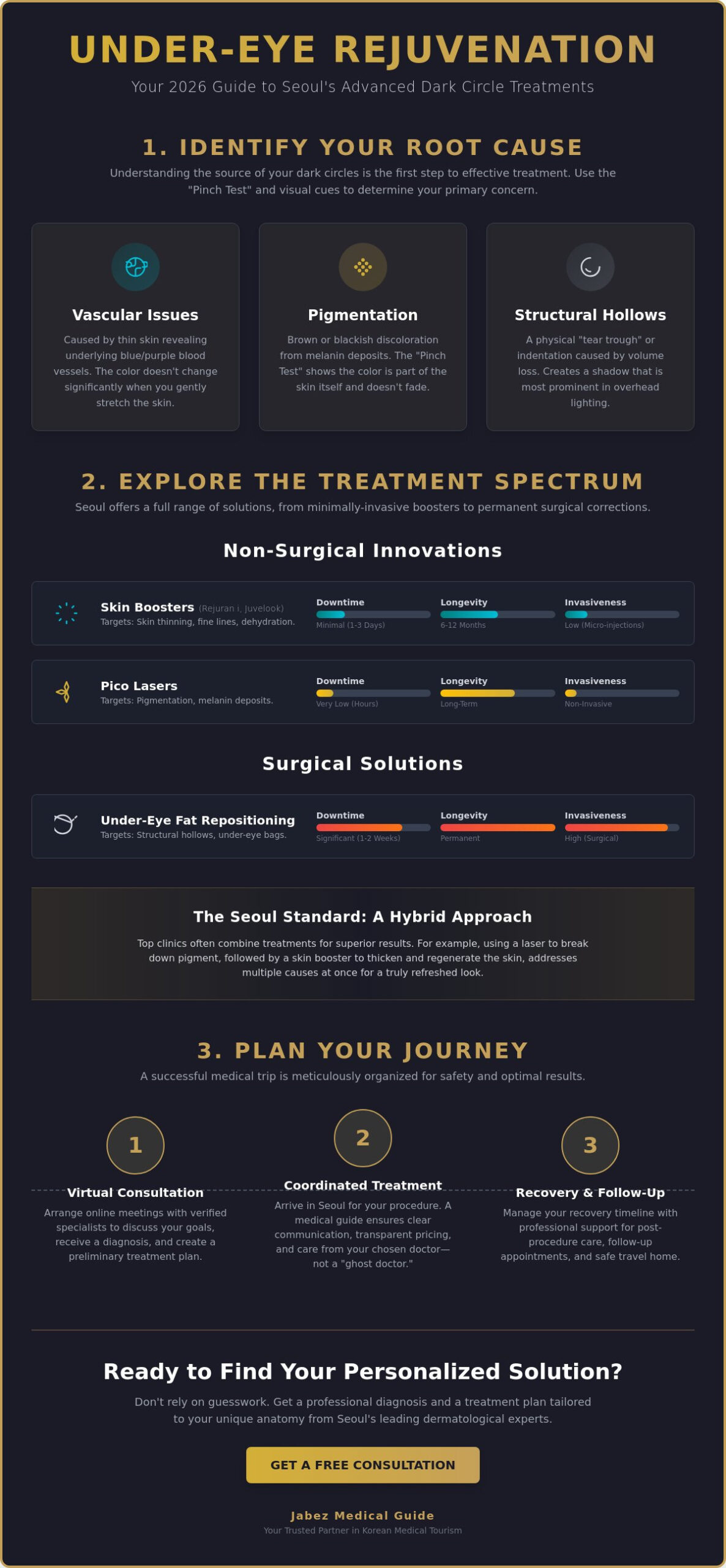
Before choosing a procedure, it helps to have a foundational Understanding Dark Circles and what specifically is creating the shadow. Most patients present with a mix of these three factors:
- Vascular issues: The skin under the eyes is the thinnest on the body. When it thins further due to aging or genetics, blue-toned blood vessels show through, creating a bruised or purple appearance.
- Pigmentation: This involves actual melanin deposits in the dermis. It’s often triggered by sun damage, chronic rubbing of the eyes, or genetic predispositions common in certain ethnicities.
- Structural hollows: Often called the “tear trough” deformity, this occurs when volume loss creates a physical dip. This indentation casts a shadow that persists regardless of how much concealer you apply.
Why Topical Eye Creams Often Fail
Most people start their journey with over-the-counter creams, only to find the results underwhelming. The primary reason is the skin’s natural barrier, which is designed to keep foreign substances out. While high-end creams might hydrate the surface, they can’t penetrate deep enough to change vascular patterns or break down deep-seated melanin. Clinical interventions like Pico lasers or Rejuran Healer boosters are necessary because they deliver energy and active ingredients directly into the dermis.
Structural hollowing requires medical-grade fillers or fat repositioning because topical products cannot restore lost bone density or deep fat volume. By moving beyond the bathroom cabinet and into a clinical setting, you can address the root cause of the shadow. This shift from topical maintenance to medical-grade dark circle treatment seoul ensures that you’re investing in results that are visible, predictable, and long-lasting.
Non-Surgical vs. Surgical: Comparing Your Dark Circle Treatment Options
Choosing the right path for dark circle treatment seoul depends entirely on whether your concern is pigment, volume, or vascularity. The 2026 Korean medical market offers a wide spectrum of care, ranging from quick procedures with no downtime to permanent surgical corrections. Many patients now prefer a hybrid approach to achieve the best results. For example, combining a pigment-targeting laser with a skin-thickening booster addresses two distinct issues at once. Regenerative treatments like Exosome therapy have also become a standard in Seoul, focusing on long-term cellular repair rather than just surface-level masking. Patients exploring facial rejuvenation often consider complementary procedures such as a thread lift in korea, which uses advanced PDO, PCL, or PLLA materials to lift and tighten surrounding facial tissue for a more comprehensive refreshed appearance.
The variety of dark circle treatment options can be categorized by their intensity and longevity. While non-invasive procedures accounted for over 70 percent of the market in recent years, surgical options remain the gold standard for those with significant structural hollowing or fat protrusion. Understanding which category fits your needs is the first step in planning a successful medical trip.
Non-Surgical Innovations: Skin Boosters and Lasers
Korean dermatology has pioneered specialized boosters like Rejuran i and Juvelook. Rejuran i utilizes polynucleotides to stimulate collagen production specifically in the delicate under-eye area. Juvelook combines hyaluronic acid with PDLLA to provide a gradual, natural volume increase by encouraging your body to build its own tissue. For those with melanin-based circles, Pico lasers deliver high-speed pulses that shatter pigment without damaging the skin surface. If you need immediate results for a tear trough shadow, hyaluronic acid fillers provide an instant lift, though these typically require maintenance every 6 to 12 months.
Surgical Solutions: Lower Blepharoplasty and Fat Repositioning
When non-surgical methods aren’t enough to correct deep structural issues, surgical intervention offers a more permanent fix. Lower blepharoplasty involves removing or shifting excess fat pads that cause “bags” and shadows. In Seoul, the preferred technique is often under-eye fat repositioning. Instead of simply removing the fat, surgeons move it into the hollow areas to create a smooth, youthful transition between the cheek and the lower lid. While non-surgical treatments offer convenience and lower costs, surgery provides results that often last for several years.
Deciding between these advanced techniques requires a professional assessment of your facial anatomy. Our team at Jabez Medical Guide provides personalized dermatology treatment management to help you select the most appropriate clinic and specialist for your specific goals.
Diagnostic Guide: How to Determine Which Under-Eye Procedure You Need
Understanding your specific concern is vital before booking a dark circle treatment seoul. While many clinics offer a wide range of services, the efficacy of each depends on an accurate diagnosis. As the Cleveland Clinic explains the causes of dark circles, factors like lifestyle, genetics, and anatomy all play a role. You can perform a few simple tests at home to narrow down your needs before your clinical consultation.
Lighting plays a massive role in how we perceive under-eye shadows. A shadow that looks deep and dark in a bathroom with overhead lights might look different in natural sunlight. Self-diagnosis isn’t about replacing a doctor’s opinion. Instead, it’s about becoming an informed patient so you can ask the right questions during your initial dermatology treatment management session.
The Mirror Test: Shadow vs. Pigment
Stand in front of a mirror in a room with overhead lighting. If you see deep shadows, take a small flashlight and shine it directly at your under-eye area. If the shadow disappears when the light is held at eye level, your issue is likely structural. This means a “tear trough” or volume loss is creating a physical dip. If the color remains even under direct light, you’re dealing with pigmentation or vascularity.
Look closely at the hue of the skin. A brown or muddy tone usually points to melanin deposits, which are often addressed with specialized lasers. A blue, purple, or pinkish tint suggests vascularity, where thin skin reveals the blood vessels beneath. If you have structural hollows, you might need a specialist for fat repositioning. If it’s purely a skin quality or pigment issue, a dermatologist is your best starting point for a dark circle treatment seoul.
Evaluating Your Skin Elasticity
The “Pinch Test” is a reliable way to check for skin laxity. Gently pinch the skin under your eye and see how quickly it snaps back. If it feels paper-thin or takes a moment to smooth out, you’ve lost significant elasticity. Younger patients often have good snap-back but may have pigment issues. They benefit most from skin boosters like Rejuran i. Older patients with significant laxity may find that non-surgical options offer limited results and might also benefit from exploring a thread lift in korea to address broader facial sagging alongside their under-eye concerns.
Collagen stimulation is the foundation of long-term health in this area. Advanced plastic surgery korea clinics prioritize tissue health by ensuring procedures don’t just “stretch” the skin but actually improve its structural integrity. A professional consultation remains the only way to get a definitive diagnosis. We act as your navigator, helping you bridge the gap between these self-tests and a clinical plan that delivers real results.
How to Plan Your Journey: A Step-by-Step Guide for International Patients
Planning a trip for medical care requires a level of organization that goes beyond typical tourism. When you’re traveling for a dark circle treatment seoul, your timeline must account for both the procedure and the necessary recovery window. Most non-surgical treatments like skin boosters or lasers allow for a very short stay, sometimes just one or two days. Surgical options, such as under-eye fat repositioning, require a minimum of seven days in the city to ensure safe stitch removal and a professional post-operative check-up.
Your journey begins long before you reach Incheon International Airport. A virtual consultation is the most critical step in this process. It’s the only way to confirm you’re a candidate for the specific treatment you want. Don’t book your flights until a specialist has reviewed your case and provided a preliminary plan. This ensures you aren’t wasting time or money on a trip for a procedure that might not address your specific diagnostic needs.
Phase 1: Virtual Consultation and Clinic Selection
To get an accurate remote assessment, you’ll need to prepare high-resolution photos. Take these in natural light from the front and both 45-degree angles without any makeup. This allows the doctor to see the true depth of any hollows or the exact shade of pigmentation. During this phase, verify that the clinic is registered with the Korea Health Industry Development Institute (KHIDI). Ask specific questions about the doctor’s experience with your skin type, as different ethnicities can react differently to certain laser wavelengths or pigment treatments.
Phase 2: Logistics and On-Site Procedure
Logistics become more complex for surgical patients. If your procedure requires an extended stay, you might need medical visa assistance to ensure your legal status is secure throughout your recovery. On the day of your treatment, a medical translator acts as your advocate. They ensure your aesthetic goals are precisely communicated to the medical team. They’ll guide you through the arrival process, the application of numbing agents or anesthesia, and the immediate aftercare instructions provided by the surgeon.
Proper healing is just as important as the procedure itself. Utilizing post-op care services korea can significantly reduce anxiety during those first few days of swelling or bruising. These services provide a bridge between the clinic and your hotel, offering the reassurance that your recovery is progressing exactly as expected. To ensure every detail of your trip is managed with professional precision, you can schedule a consultation with Jabez Medical Guide today.
Secure Your Results: The Role of a Medical Guide in Under-Eye Rejuvenation
Navigating an international medical system often brings up valid concerns about safety and quality. The most common fear for patients traveling for a dark circle treatment seoul is the “ghost doctor” phenomenon, where a less experienced practitioner performs the procedure instead of the chosen specialist. Working with a dedicated partner for dermatology treatment management eliminates this uncertainty. We ensure that the expert you meet during your consultation is the same professional who performs your treatment, providing the clinical precision and peace of mind you deserve.
Transparency extends to financial matters as well. While the 10 percent VAT refund for cosmetic procedures was abolished on January 1, 2026, we help you understand the actual cost of care without hidden “foreigner premiums.” Our role is to act as your advocate, verifying that clinic pricing is fair and consistent with local standards. This level of oversight allows you to focus entirely on your rejuvenation rather than administrative hurdles or pricing discrepancies.
Transparency and Safety Advocacy
Safety is our highest priority when coordinating your care. We strictly partner with clinics that adhere to the 2023 mandate requiring CCTV in operating rooms, which is now a standard legal right for all patients in South Korea. This provides an extra layer of verification, particularly for surgical procedures like under-eye fat repositioning. Our team meticulously verifies clinic safety records and historical surgical outcomes before making any recommendations.
Beyond safety records, we provide personal assistance to ensure every post-operative instruction and medical record is translated accurately into English. This prevents any miscommunication that could affect your healing process. Having a guide means you have a steadying influence during your stay, offering support if you have questions about your recovery timeline or medication schedules. We act as the bridge between you and the medical staff, ensuring your voice is heard throughout the process.
Beyond the Procedure: A Stress-Free Experience
Your journey doesn’t end when you leave the clinic doors. We manage the logistical details that make a medical trip successful, including airport pick-up and drop-off and arranging recovery-friendly accommodations. These recovery support services are designed to keep you comfortable while you wait for initial swelling or bruising to subside. We understand that the first few days after a procedure are the most critical for your comfort and confidence.
Even after you return home, our partnership continues. We facilitate follow-up appointments and remote check-ins with your doctor to monitor your long-term progress. This holistic approach ensures that your dark circle treatment seoul results are protected long after you leave Korea. Professional coordination transforms a complex medical trip into a structured, predictable path toward brighter eyes. To start your personalized journey with a team that values your safety and comfort, schedule a consultation with Jabez Medical Guide today.
Your Journey Toward Lasting Under-Eye Rejuvenation
Achieving a refreshed appearance starts with understanding that under-eye shadows are rarely a surface-level problem. By identifying whether your concerns are structural, vascular, or pigment-based, you can choose a dark circle treatment seoul that provides visible, long-term improvement. The 2026 landscape of Korean dermatology offers unparalleled innovation, but the best results always stem from meticulous planning and professional oversight. You don’t have to manage these complexities alone.
Our team provides the structural support you need for a safe and successful medical trip. We connect you with government-approved partner clinics and provide certified medical translation to ensure your aesthetic goals are perfectly understood. From end-to-end international patient logistics to dedicated recovery support, we act as your steady navigator in a foreign environment. You deserve a journey that’s as smooth and predictable as the results you seek.
Start Your Personalized Dark Circle Consultation with Jabez Medical Guide today and take the first step toward eyes that look as vibrant as you feel.
Frequently Asked Questions
How long do dark circle treatments in Korea typically last?
Longevity depends entirely on the specific procedure you choose. Non-surgical options like hyaluronic acid fillers or skin boosters typically last between 6 and 12 months before requiring a maintenance session. In contrast, surgical interventions such as under-eye fat repositioning offer results that can last for several years. Your lifestyle and skin elasticity will also influence how long the effects of your dark circle treatment seoul remain visible.
Is under-eye filler safe for the delicate eye area?
Under-eye fillers are considered safe when administered by a board-certified specialist who understands the complex anatomy of the tear trough. Most Korean clinics use micro-cannulas rather than traditional needles to minimize bruising and ensure precise placement. Because these fillers are typically made of hyaluronic acid, they’re fully reversible, providing an added layer of safety and peace of mind for international patients.
What is the average recovery time for lower blepharoplasty in Seoul?
Most patients experience a primary recovery period of 7 to 10 days following a lower blepharoplasty. Stitches are usually removed on the seventh day, after which point most swelling and bruising begin to subside significantly. While you can return to light activities quickly, the final refined results of your surgical dark circle treatment seoul will continue to settle over the course of one to three months.
Can lasers completely remove hereditary dark circles?
Lasers can significantly lighten hereditary dark circles, but they rarely eliminate them entirely if the cause is genetic pigmentation or deep bone structure. Pico lasers and toning treatments work by breaking down melanin and stimulating collagen to thicken the skin over time. While these provide a much brighter and more refreshed appearance, you may need periodic maintenance sessions to sustain the results against genetic predispositions.
How do I choose between a dermatologist and a plastic surgeon for dark circles?
Your choice should depend on whether your concern is skin-deep or structural. A dermatologist is the ideal choice for treating surface pigmentation, fine lines, and thin skin with lasers or boosters. If you’re dealing with bulging fat pads or deep hollows that require shifting tissue, a plastic surgeon is better equipped to provide a structural solution through fat repositioning or a lower blepharoplasty.
Will I need multiple sessions for skin boosters like Rejuran i?
Optimal results with Rejuran i usually require a series of three sessions spaced two to four weeks apart. This cumulative approach allows the polynucleotides to effectively repair the skin barrier and stimulate natural collagen production. While you might notice subtle hydration after the first visit, the full thickening effect on the under-eye dermis typically peaks about one month after the third treatment is completed.
What should I do if I am unhappy with my results after returning home?
You should immediately contact your dermatology treatment management team if you have concerns after returning home. We facilitate remote check-ins with your performing doctor to assess your progress through high-resolution photos and video calls. Most minor issues like prolonged swelling are part of the natural healing process, but having a professional coordinator ensures you have a direct line of communication for clinical advice.
Are there non-surgical options for severe under-eye bags?
Non-surgical options like Juvelook or high-density fillers can camouflage mild to moderate under-eye bags by smoothing the transition between the cheek and the lower eyelid. However, severe fat protrusion usually requires surgical intervention for a truly flat and refreshed look. A virtual consultation is the most effective way to determine if non-invasive methods can realistically meet your specific aesthetic expectations.