

South Korea currently maintains the highest rate of cosmetic procedures per capita globally, but for an international patient, this vast landscape can feel more overwhelming than inviting. You’re likely drawn to the country’s reputation for surgical excellence, yet it’s natural to feel uneasy about the risks of “ghost doctors,” language barriers, or the logistics of post-operative recovery. When considering plastic surgery korea, the difference between a stressful ordeal and a successful transformation often comes down to the quality of your preparation and your support system.
We understand that your peace of mind is just as important as your surgical outcome. This guide provides a clear, clinical roadmap for navigating the 2026 Korean medical landscape with confidence and personalized concierge care. You’ll learn about essential updates, including the mandatory CCTV recording laws and the 2026 abolition of VAT refunds for foreign patients. We’ll also detail how to secure accredited safety and natural results without the typical stress of international travel; this ensures you feel supported from your initial consultation through your final recovery milestone.
Key Takeaways
- Learn how the “Korean Standard” prioritizes surgical precision and the philosophy of “Harmony over Change” to achieve natural-looking aesthetics.
- Discover the essential safety protocols for plastic surgery korea, including how to verify surgeon credentials and utilize mandatory CCTV recording laws.
- Master the logistical timeline of your journey, from selecting the correct medical visa to managing post-operative recovery after a long-haul flight.
- Understand why professional 1:1 English coordination is vital for bridging communication gaps and ensuring your specific surgical goals are met.
- Explore the benefits of a dedicated medical concierge in navigating the South Korean healthcare system with clinical precision and personalized care.
Why South Korea is the Global Capital for Plastic Surgery
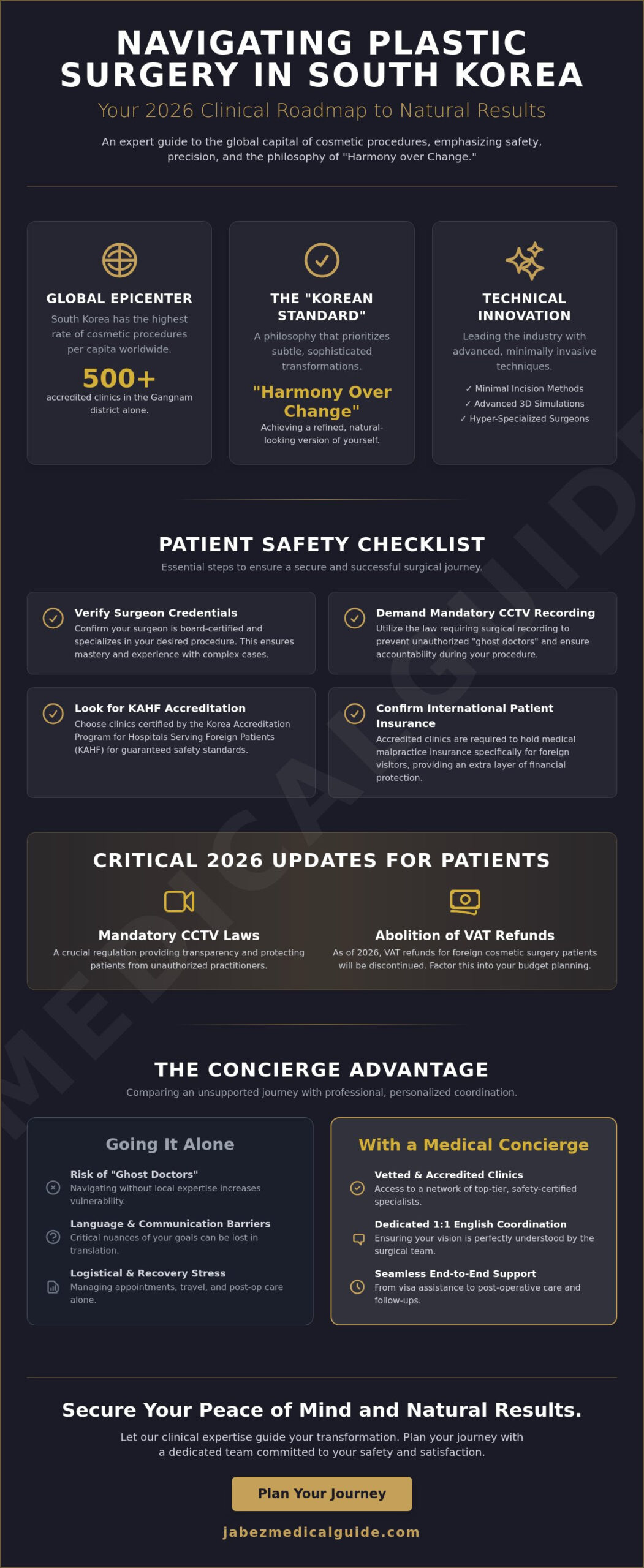
South Korea’s reputation as the global plastic surgery capital isn’t merely a result of high demand. It’s the product of a medical ecosystem that prioritizes extreme specialization and technical innovation. The “Korean Standard” of beauty focuses on a delicate balance between surgical precision and natural aesthetics. Unlike some regions where “obvious” results are common, Korean surgeons aim for a refined version of yourself that emphasizes harmony over drastic change. This philosophy has made plastic surgery korea the gold standard for patients seeking subtle, sophisticated transformations.
The sheer volume of procedures performed in Seoul creates a unique environment for surgical mastery. With over 2,500 clinics nationwide and more than 500 concentrated in the Gangnam district alone, the competition drives surgeons to achieve perfection in very specific niches. It’s common for a board-certified surgeon to spend their entire career focusing solely on rhinoplasty or blepharoplasty. This level of repetition allows them to encounter and solve complex anatomical challenges that a generalist might rarely see. Becoming a board-certified plastic surgeon in Korea requires years of rigorous residency and specialized training, ensuring that only the most skilled hands lead the industry.
The Innovation Gap: Korean vs. Western Techniques
Korean medical technology often leads the way in “minimal incision” and “scarless” methods. These techniques are designed to reduce recovery time and visible marking, which is a primary concern for international patients. Clinics frequently utilize advanced 3D simulation and imaging during the planning phase. This allows you to visualize your potential results with clinical accuracy before the procedure begins. Because surgeons hyper-specialize in specific facial features, they develop proprietary tools and methods that prioritize long-term structural integrity alongside immediate aesthetic improvement.
Safety Standards and Government Accreditation (KAHF)
Patient safety is a cornerstone of the Korean medical tourism industry, backed by significant government oversight. When researching clinics, it’s vital to look for the KAHF (Korean Accreditation Program for Hospitals Serving Foreign Patients) certification. This designation is awarded by the Ministry of Health and Welfare to facilities that meet stringent criteria for hygiene, emergency readiness, and international patient services. Accredited clinics are also required to maintain medical malpractice insurance specifically for international visitors. These regulations provide a layer of legal and clinical protection that gives you peace of mind throughout your journey.
Most Sought-After Procedures and Specialized Techniques
Patients from the United States often choose plastic surgery korea because they seek a specific surgical philosophy: “Harmony over Change.” This approach avoids the “overdone” aesthetic, focusing instead on enhancing existing features through meticulous, incremental adjustments. While the technical skill is a primary draw, many patients are also motivated by the availability of specialized techniques that aren’t as widely practiced in the West. To help you plan your journey effectively, you can review our Average Plastic Surgery Korea Price List for 2026.
A growing trend among international visitors is the integration of non-invasive dermatology treatments with their surgical plans. Laser therapies, skin boosters, and medical-grade facials serve as a vital complement to invasive procedures. These treatments improve skin texture and can actually support the healing process by ensuring the skin is in peak condition. This holistic view of aesthetics ensures that the final result looks refreshed rather than just “operated on.”
Facial Contouring and Bone Surgery
Facial contouring, including V-line surgery and zygoma (cheekbone) reduction, requires a high level of clinical precision. V-line surgery combines mandible reduction with chin contouring to create a more slender, balanced lower face. Because these procedures involve the bone, safety protocols are paramount. Accredited clinics utilize 3D-CT scanning for preoperative mapping and employ full-time, board-certified anesthesiologists to monitor patients throughout the surgery. Recovery for bone-based procedures is a gradual process; while initial swelling subsides in about two weeks, the final refined shape typically emerges after three to six months.
Advanced Rhinoplasty and Blepharoplasty
Korean surgeons have pioneered “Asian rhinoplasty” techniques that focus on structural support and tip definition. These skills translate exceptionally well to “Ethnic rhinoplasty” for a diverse US patient base, as surgeons here are accustomed to working with various cartilage strengths and skin thicknesses. Similarly, double eyelid surgery has evolved beyond simple crease creation. Modern techniques often include ptosis correction to strengthen the eyelid muscle, resulting in a more alert and natural appearance. Korea has also become the global center for revision surgeries. Specialists here are world-renowned for their ability to correct previous surgical outcomes, often using advanced materials or autologous rib cartilage to restore both function and form.
If you’re feeling overwhelmed by the technical choices, our team can help you coordinate a professional consultation to find the specialist best suited for your specific needs.
Evaluating Clinics: A Framework for US Patients
Selecting the right facility for plastic surgery korea requires a methodical approach that looks beyond the surface of high-end marketing. While many clinics present themselves as world-class, it’s your responsibility, or that of your coordinator, to verify their clinical credentials. One of the most critical issues to address is the “ghost doctor” phenomenon. This occurs when a junior surgeon performs the procedure instead of the specialist you met during your consultation. To protect yourself, always confirm the clinic follows the 2026 mandatory CCTV laws, which allow you to request a recording of your surgery as a legal right.
Relying on generic translation apps is another common mistake that can compromise your results. Medical terminology is complex, and a small misunderstanding can lead to outcomes that don’t align with your vision. A dedicated 1:1 English-speaking coordinator is vital; they bridge the communication gap and advocate for your needs during every medical interaction. When researching, look for authentic patient experiences on independent forums rather than just the clinic’s own website. For an objective starting point, you can review our list of the Top Plastic Surgery Clinics in South Korea for Foreigners.
Red Flags to Avoid During Your Search
Be cautious of clinics that offer extremely low prices for plastic surgery korea or use high-pressure sales tactics to secure a deposit. Quality surgical care requires time, specialized materials, and a full medical team, all of which have fixed costs. “Factory-style” clinics often prioritize patient volume over safety, which can lead to rushed procedures and inadequate aftercare. Always verify that a clinic is officially registered with the Ministry of Health and Welfare. If a facility skips essential preoperative tests, such as blood work or heart health screenings, it’s a clear sign that patient safety isn’t their primary focus.
The Value of a Virtual Consultation
A virtual consultation is your first opportunity to assess a surgeon’s expertise and bedside manner from the comfort of your home. Before your video call, prepare clear, high-resolution photos of the treatment area from the front, profile, and 45-degree angles. You should also have a concise list of your medical history and any previous procedures ready for review. Using a facilitator allows you to obtain opinions from several different clinics efficiently, often without the burden of multiple individual fees. This comparative approach helps you find a surgeon whose aesthetic style truly matches your own. The ideal consultation outcome consists of clear expectations and a detailed surgical plan.
Planning Your Journey: Logistics, Visas, and Recovery
Planning for plastic surgery korea begins months before your departure. A typical timeline includes an initial inquiry, virtual consultation, and securing your surgical date. Once these are set, you can focus on the logistics of the trip itself. Having a local navigator to manage your airport transfers and hotel check-ins is highly recommended. This support reduces the inherent stress of arriving in a foreign environment while preparing for a medical procedure.
The 14-hour flight from the United States presents specific physical challenges. Deep Vein Thrombosis (DVT) prevention is a critical priority for any patient. We recommend wearing compression socks and moving frequently during the flight. It’s best to arrive in Seoul at least 48 hours before your procedure. This time allows your body to adjust to the new time zone and ensures you are well-rested for your final in-person consultation and preoperative tests.
Your financial planning must account for recent regulatory changes. As of January 1, 2026, the 10% Value Added Tax (VAT) refund for foreign patients undergoing cosmetic procedures has been abolished. International patients are no longer eligible for this refund, so you should budget for the full cost of your treatment. Most clinics accept major credit cards, but you should notify your bank of your travel plans to prevent any payment issues during your stay.
Understanding the C-3-3 Medical Visa
While U.S. citizens don’t require a visa for stays under 90 days for tourism, the C-3-3 medical visa is the designated option for those seeking clinical care. This visa requires a formal “Letter of Invitation” from an accredited medical institution or agency. If your treatment and recovery plan will exceed 90 days, you must apply for the G-1-10 Medical Stay Visa instead. Starting this application at least six weeks before your flight helps you avoid common pitfalls like documentation errors or processing delays. For those planning to visit other regional destinations like Vietnam during their trip, Vietnamese-Evisa.Org provides specialized assistance for urgent entry requirements.
The Post-Op Recovery Phase
We generally recommend a stay of 10 to 14 days in Seoul. This “golden window” ensures you have access to your surgical team during the most critical phase of your plastic surgery korea journey. Professional aftercare often includes specialized deswelling treatments and infrared light therapy to accelerate healing. Many patients choose to stay in dedicated “Recovery Hotels.” These facilities are designed for post-surgical comfort and provide a quiet, supportive environment for your initial healing phase. To understand exactly what a structured recovery plan entails and how it protects your surgical investment, review our comprehensive guide to post-op care services in Korea for the latest 2026 standards.
To ensure your travel documents and recovery plans are in order, you can contact our visa assistance team for personalized guidance.
The Facilitator Advantage: Why Coordination Matters
Choosing to undergo plastic surgery korea is a significant life decision that involves more than just selecting a surgeon. It requires a transition from being a medical patient to being an honored guest in a foreign country. This shift in perspective is the foundation of the concierge philosophy. While the technical aspects of surgery happen in the operating room, your overall success and well-being depend on the support system surrounding those clinical moments. A dedicated coordinator acts as your steadying influence, ensuring that your journey is defined by comfort rather than logistical confusion.
Jabez Medical Guide bridges the gap between high Western expectations and the intricate Korean medical system. We understand that international patients often feel a sense of vulnerability when navigating a different healthcare culture. Our role is to provide a layer of professional reassurance by managing every detail of your stay. This includes the presence of certified medical translators who specialize in high-stakes surgical environments. Unlike general translators, these professionals understand the nuances of medical terminology and anatomical descriptions, ensuring that your goals are communicated with absolute precision to your surgical team.
Reliability is essential when you’re thousands of miles from home. Having 24/7 support means that whether you have a simple logistical question about your hotel or a late-night concern during your recovery, you’re never alone. This constant availability provides the peace of mind necessary for a stress-free healing process.
Personalized Concierge vs. Going Alone
Self-booking your medical travel often leads to high stress levels and a greater potential for error. When you manage the process alone, the “unseen” details can quickly become overwhelming. Jabez handles these essential tasks for you, including pharmacy runs for your prescribed medications, grocery delivery for post-op nutrition, and the meticulous scheduling of your follow-up appointments. Having a Seoul-based advocate ensures that you’re treated with the priority you deserve. We act as your local partner, navigating the density of the Gangnam medical district to ensure your schedule remains organized and efficient.
Your Next Steps with Jabez Medical Guide
Your journey toward a more confident version of yourself begins with a methodical planning phase. We offer a free, no-obligation assessment to understand your aesthetic goals and medical history. Following this initial review, we focus on matching you with the specific specialist whose skills and aesthetic style align with your vision. This personalized matching process is vital for achieving the natural-looking results discussed earlier in this guide. Once your surgeon is selected, we manage the coordination of your medical visa assistance and airport pick-up to ensure a seamless arrival.
Ready to move forward with clinical precision and dedicated support? Contact Jabez Medical Guide to start your safe transformation and discover the benefits of expert coordination for your plastic surgery korea experience.
Your Path to a Confident Transformation
Choosing plastic surgery korea is a significant step toward achieving your aesthetic goals with world-class precision. Success in this specialized landscape requires more than just finding a skilled surgeon. It demands a thorough understanding of clinical safety, mandatory CCTV rights, and the meticulous coordination of your international travel. By prioritizing accredited hospitals and professional advocacy, you ensure that your focus remains entirely on your recovery and the natural-looking results you desire.
Jabez Medical Guide acts as your reliable navigator throughout this entire process. We provide peace of mind through our established partnerships with government-accredited hospitals and the support of certified medical translation services. Our comprehensive end-to-end concierge support handles everything from medical visa assistance to professional post-op care services in Korea that meet the latest 2026 standards. This approach allows you to experience the best of South Korean medical innovation without the logistical stress. You don’t have to manage this complex journey alone.
Begin Your Personalized Consultation with Jabez Medical Guide today. We’re ready to help you move forward with confidence and clinical excellence.
Frequently Asked Questions
Is plastic surgery in South Korea safe for international patients?
Safety is the highest priority in the South Korean medical system, which is supported by strict government regulations and mandatory CCTV laws established in 2026. You should always choose a clinic that holds KAHF certification from the Ministry of Health and Welfare. This accreditation ensures the facility meets rigorous standards for hygiene, emergency equipment, and international patient care. Working with a professional coordinator adds an extra layer of safety by verifying your surgeon’s board certification.
How much does plastic surgery cost in Korea compared to the US?
Patients typically find that plastic surgery korea offers a high standard of care with significant cost efficiency compared to the United States. While specific costs vary based on the clinic and the surgeon’s specialized expertise, the overall expense for major procedures often remains substantially lower than in Western markets. These savings frequently allow patients to include professional coordination and luxury recovery accommodations while still spending less than they would for surgery alone in the US.
Do I need to speak Korean to have surgery in South Korea?
You don’t need to speak Korean to have a successful surgical experience. Most top-tier clinics in the Gangnam district employ English-speaking staff, but relying on a professional medical translator is essential for clinical precision. A dedicated coordinator ensures that your aesthetic goals and medical history are communicated accurately to your surgical team. This professional advocacy eliminates the risk of misunderstandings during your consultations and post-operative instructions.
How long do I need to stay in Korea after my surgery?
Plan to stay in South Korea for 10 to 14 days for most procedures. This duration is essential for plastic surgery korea as it covers your initial healing phase and your first few follow-up appointments. It also ensures you’re present for the removal of any stitches or bandages before your return flight. For more invasive bone surgeries, your coordinator might suggest extending your stay to ensure you’re fully cleared for long-haul travel.
What is the best time of year to travel to Korea for surgery?
Spring and autumn are the most comfortable seasons for medical travel. The mild weather from March to May and September to November makes walking and light activity easier during your recovery. While winter is popular for its reduced swelling benefits due to the cold air, many clinics are busier during this peak season. Planning your journey during the shoulder seasons often provides a more relaxed environment for your consultations and follow-up care.
How do I apply for a South Korean medical visa?
U.S. citizens can apply for a C-3-3 medical visa for treatments lasting under 90 days. To begin the application, you’ll need a formal “Letter of Invitation” from an accredited medical institution or a registered coordination agency. If your treatment plan and recovery require more than 90 days, you must apply for the G-1-10 Medical Stay Visa. We recommend starting this process at least six weeks before your intended departure date.
What happens if I have complications after returning to the US?
If complications arise after you return, your first step is to contact your coordinator and surgical team immediately. We maintain detailed records of your procedure and can facilitate virtual consultations with your surgeon to assess the situation. For urgent matters, we recommend visiting a board-certified specialist in your local area while we coordinate the exchange of medical information and clinical notes with your original Korean surgical team.
Are Korean plastic surgery results permanent?
Most surgical results, such as rhinoplasty or facial contouring, are permanent and designed to provide a lifetime of satisfaction. Soft tissue procedures like blepharoplasty also offer long-term results, although they’re still subject to the natural aging process over several decades. Maintaining a stable weight and following a healthy lifestyle will help preserve your surgical outcome. Your surgeon will provide specific long-term care instructions to ensure your results age gracefully alongside you.