

Did you know that an unregistered broker can charge you up to 500% more than the official price for a procedure in Korea? It’s a staggering reality that many international patients overlook until they’ve already arrived. Finding a trustworthy korea medical tourism facilitator is no longer just about booking a flight; it’s about ensuring your legal safety in a system that has recently undergone major regulatory shifts. You likely feel a mix of excitement for your transformation and a deep anxiety about language barriers or hidden costs. It’s natural to worry about who will advocate for you during surgery or if something doesn’t go as planned in a foreign country.
This guide provides the clarity you need to move forward with peace of mind. You’ll learn exactly how to verify an agency’s legal registration and why the 2026 mandatory CCTV laws are your greatest protection against “shadow doctors.” We’ll walk through a vital checklist covering everything from streamlined medical visas to the recent discontinuation of VAT refunds. By the end, you’ll have a verified roadmap for a seamless, stress-free recovery experience in Korea’s world-class healthcare system.
Key Takeaways
- Understand why a licensed coordinator serves as a vital legal safeguard between you and accredited clinics, providing security that standard travel agencies can’t offer.
- Learn how to verify that your korea medical tourism facilitator holds the mandatory Ministry of Health and Welfare registration to protect your patient rights.
- Evaluate the depth of logistics support you’ll need, including specialized airport transfers and 24/7 on-call assistance for your post-operative care.
- Distinguish between general translation and professional medical interpretation to ensure clear communication during your most critical surgical consultations.
- Use our comprehensive 2026 scorecard and vetting questions to confidently select a partner that prioritizes your safety and recovery.
What is a Korea Medical Tourism Facilitator and Why Do You Need One?
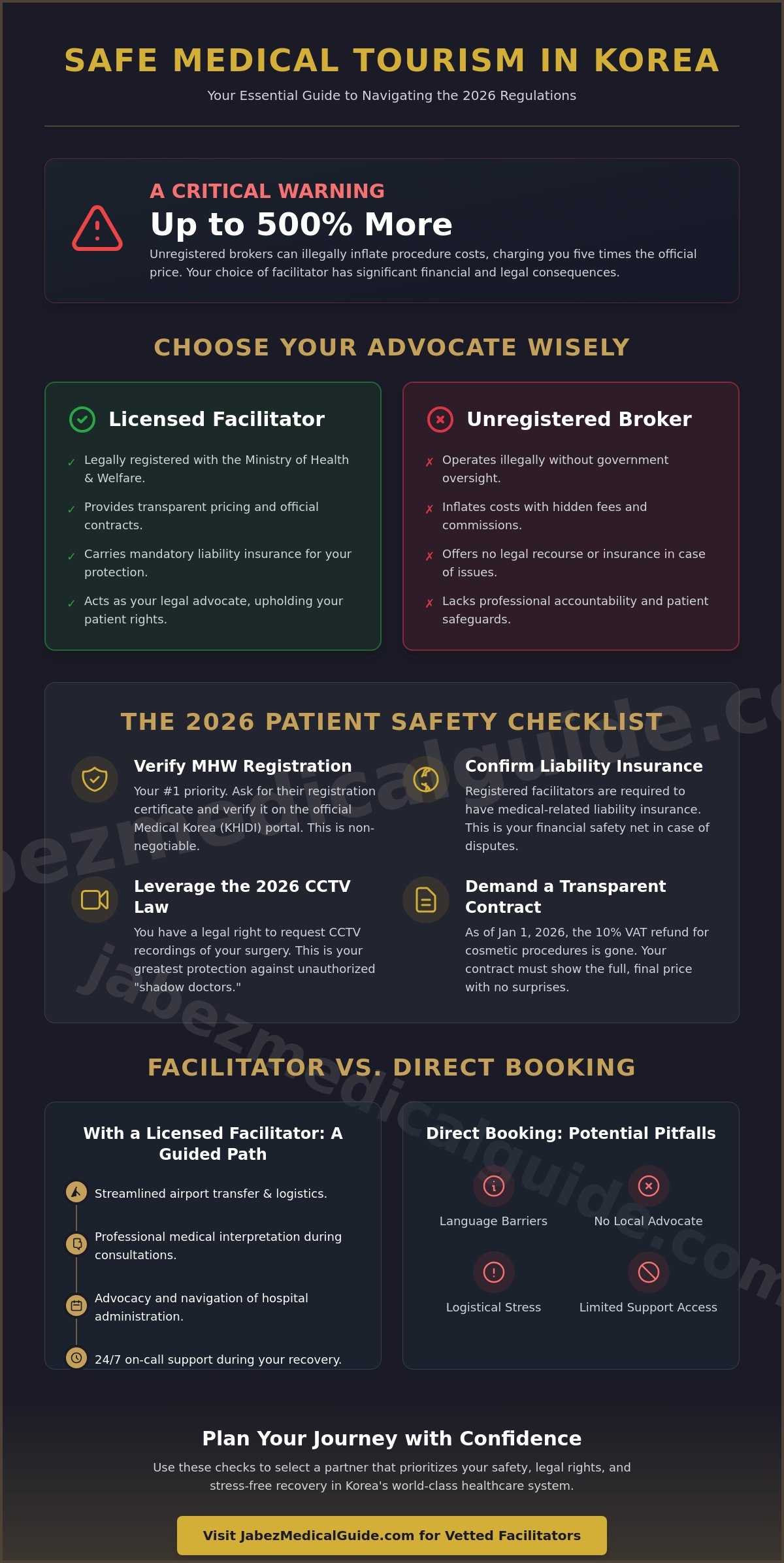
A korea medical tourism facilitator is a government-registered entity that serves as a vital link between international patients and the South Korean healthcare system. Unlike a standard travel agency that focuses on flights and hotels, a facilitator specializes in medical advocacy and logistical coordination. Their primary goal is to ensure your journey is safe, transparent, and medically sound. This role has become even more critical in 2026. Recent regulatory changes, such as the discontinuation of the 10% VAT refund for cosmetic procedures, mean patients must navigate pricing structures that now align with local rates. A licensed facilitator prevents you from being overcharged by illegal brokers who have been known to inflate costs by as much as 500%.
The financial structure of these services is strictly governed by the Ministry of Health and Welfare. Licensed facilitators are permitted to receive commissions from clinics, which are capped at 20% for general hospitals and 30% for private clinics. Many facilitators use this model to provide you with complimentary services like professional translation or airport transportation without adding extra fees to your medical bill. This creates a transparent partnership where the facilitator is incentivized to ensure your satisfaction and safety.
The Role of a Professional Navigator
Your facilitator acts as an expert guide through the vast landscape of Medical tourism in South Korea. They help you select a specialist based on your unique medical history rather than just marketing brochures. They manage every step of your timeline, from your first virtual consultation to your final post-operative check-up. By acting as your advocate during hospital administrative processes, they ensure your patient rights are fully respected. This includes assisting you with the legal right to request mandatory CCTV recordings of your surgery, a standard safety measure in 2026.
Facilitator vs. Direct Booking: A Comparison
Booking a procedure directly with a hospital might seem straightforward, but it often leaves patients vulnerable to communication gaps and logistical stress. A korea medical tourism facilitator provides a local presence to handle unexpected changes, such as flight delays or shifting recovery needs. They grant you access to dedicated international support structures within hospitals that aren’t always accessible to solo travelers. Choosing a professional partner means you have a dedicated team managing your airport pick-up, medical visa assistance, and recovery support. This allows you to focus entirely on your healing while your coordinator handles the complex details of the foreign healthcare system.
The Essential Safety and Legal Checklist for 2026
Safety in international healthcare isn’t just a feeling; it’s a rigorous legal framework. In 2026, the South Korean government has tightened regulations to ensure that every international patient receives high-quality, ethical care. Every legitimate korea medical tourism facilitator must be registered with the Ministry of Health and Welfare (MHW). This registration isn’t just a formality. It’s a legal requirement that grants you protection under Korean law. If an agency cannot provide their registration certificate, they’re likely an “unregistered broker.” These entities operate without government oversight and often lack the professional accountability needed to handle complex medical journeys.
Working with a designated outstanding medical tourism facilitator ensures you’re protected by mandatory liability insurance. By 2026 standards, all government-approved facilitators must carry medical-related insurance specifically designed to protect international patients. This insurance serves as a vital safety net in the rare event of a dispute or medical complication. Transparency is equally important. Your facilitator should provide an official medical contract that clearly outlines the scope of services and the final price. Since the 10% VAT refund for cosmetic surgery was discontinued on January 1, 2026, your contract should reflect the full, transparent price that local patients also pay.
Verifying Official Government Registration
You can verify an agency’s legal status within minutes. The Medical Korea portal, managed by the Korea Health Industry Development Institute (KHIDI), maintains a searchable database of all registered facilitators. Simply ask for an agency’s license number and cross-reference it on the portal. This step is the most effective way to avoid illegal brokers who have been known to upcharge patients by significant margins. A registered korea medical tourism facilitator acts as your legal bridge, ensuring that the clinics they partner with are also government-accredited and compliant with 2026 safety laws, such as mandatory surgery room CCTV recording.
Data Privacy and HIPAA-Equivalent Standards
Your medical records and consultation photos are highly sensitive. Professional facilitators use secure, encrypted communication channels to manage your data, adhering to privacy standards that mirror HIPAA regulations. Before you share any personal information, confirm that the agency has a written privacy policy that guarantees your confidentiality. This ensures your data is only shared with the medical specialists involved in your care. Choosing a partner who prioritizes these legal standards is the first step toward a successful journey. If you’re ready to begin your search with a verified team, you can explore how our specialized coordination services prioritize your safety and legal protection.
Evaluating Concierge and Logistics Support Services
While many travel agencies can book a flight to Seoul, a korea medical tourism facilitator provides a specialized layer of clinical logistics. This distinction is vital for your safety. A general travel agent might not understand that a patient recovering from a hair restoration or dental procedure requires specific vehicle suspension or climate control for optimal comfort. In 2026, the process for the C-3-3 medical tourism visa has been streamlined for faster approval. Your facilitator should handle this application directly, ensuring you have the correct documentation for a legal stay. This prevents the administrative stress that often accompanies international medical travel.
Logistics also extend to your living environment. A professional coordinator selects accommodations that understand the needs of medical travelers. This includes ensuring your room has easy elevator access, specialized bedding, and proximity to your clinic for follow-up appointments. They act as your local bridge, managing 24/7 on-call support for any post-operative concerns that may arise during the night. With over 1.17 million foreign patients visiting Korea in 2024, the infrastructure for medical stays has matured, but only a dedicated korea medical tourism facilitator knows which providers meet these high clinical standards.
From Arrival to Recovery: The Logistics Arc
The journey begins the moment you land at Incheon International Airport. A premium facilitator provides more than just a ride; they offer a sanitized, private vehicle designed for post-surgery transport. Once you’re settled, your coordinator manages the practical details that can feel overwhelming in a foreign country. They handle your prescription fulfillment at local pharmacies and ensure you understand your medication schedule. This level of detail prevents errors and reduces the stress often associated with navigating a new healthcare system alone.
Premium Concierge: Beyond the Basics
True medical coordination involves holistic care that supports your body’s healing process. This includes arranging specialized recovery nutrition, such as high-protein or low-sodium meals delivered directly to your door. If you’re traveling with family, your facilitator should offer support for their needs too, from local orientation to translation assistance. Before you depart, they ensure all medical documentation and discharge papers are translated and organized. This meticulous planning guarantees a seamless transition back to your home country; for those looking to maintain their health improvements, the Program Longevity Praha at Concierge Medicine Europe offers a model for sustaining vitality long after the initial procedure.
Communication and Medical Translation Standards
Clear communication is the foundation of patient safety; it’s the difference between a successful outcome and a stressful misunderstanding. A professional korea medical tourism facilitator ensures that no clinical detail is lost during your journey. Many patients mistakenly assume that basic translation is enough, but medical interpretation requires a much higher level of precision. In 2026, the standard for excellence involves coordinators who understand anatomy, surgical techniques, and pharmacology. This expertise ensures that your surgeon’s instructions are conveyed with 100% accuracy, particularly during the critical moments of consultation and discharge.
Your facilitator should provide a structured communication plan that begins long before you board your flight. This includes translating all medical consent forms into your native language so you can review them without pressure. Relying on a korea medical tourism facilitator also means having a dedicated advocate who is present when you’re most vulnerable, such as during post-operative rounds. A reliable communication checklist should include:
- Certified Medical Interpreters: Verification of specialized training in your specific procedure area.
- Full Document Translation: Native-language versions of all pre-op and post-op instructions.
- Presence at Key Milestones: Ensuring an interpreter is physically present for the initial consultation and final discharge.
- Encrypted Remote Support: Real-time access to your coordinator via secure messaging apps for immediate questions.
Why Certified Medical Interpreters are Non-Negotiable
Using a general translator or a “hospital-provided” interpreter can sometimes lead to a conflict of interest. Hospital staff are employees of the clinic, which might influence how they present risks or administrative details. An independent facilitator works for you. They ensure you fully grasp the surgical risks and recovery timelines without any glossing over of the facts. This independent advocacy is essential for procedures in plastic surgery or dentistry, where aesthetic nuances and technical specifications require exact understanding.
Virtual Consultations and Pre-Arrival Support
Modern facilitators use technology to build trust before you arrive in Seoul. You can use your coordinator to bridge the gap during virtual plastic surgery consultations, allowing you to ask technical questions in real-time. The facilitator gathers your medical history and shares it securely with the surgical team, ensuring the doctor is fully prepared for your arrival. This pre-arrival phase establishes a clear line of communication, giving you peace of mind that your needs are understood. If you’re ready to ensure your medical needs are perfectly communicated, you can book a consultation with our certified team to start your journey with confidence.
Making Your Final Decision: The Facilitator Scorecard
Selecting the right partner is the final, most critical step in your journey to South Korea. By now, you understand the legal requirements and the logistical support necessary for a safe experience. To help you finalize your choice, it’s helpful to categorize features into “must-haves” and “nice-to-haves.” A reputable korea medical tourism facilitator should meet all mandatory safety criteria before you even consider their premium perks. Use the following scorecard to evaluate your options:
- Must-Have Features: Ministry of Health and Welfare (MHW) registration, certified medical interpreters, transparent pricing contracts, and a 24/7 post-operative support protocol.
- Nice-to-Have Features: Specialized recovery meal delivery, family member orientation, airport VIP lounge access, and local SIM card or Wi-Fi assistance.
Beyond the paperwork, look for authentic social proof. Verified patient results and video testimonials provide a clearer picture of an agency’s reliability than stock photos ever could. Be wary of “red flags” such as high-pressure sales tactics, a lack of a physical office address in Korea, or any facilitator who discourages you from asking about the clinic’s legal standing or CCTV policies. If an agency seems more focused on the deposit than your medical history, it’s a sign to look elsewhere.
The Vetting Interview: Questions to Ask
Before signing any agreement, schedule a call to interview your potential coordinator. Their responsiveness and clarity will tell you a lot about the care you’ll receive on the ground. Be direct with your questions:
- “How many patients have you coordinated for this specific procedure this year?” Experience in your specific treatment area is vital for accurate advice.
- “What is your protocol if a medical complication occurs at 3:00 AM?” You need to know exactly who will be by your side in an emergency.
- “Can you provide a line-item breakdown of all concierge fees?” Transparency in costs prevents unexpected financial stress during your recovery.
The Jabez Medical Guide Standard
At Jabez Medical Guide, we set a higher benchmark for what a korea medical tourism facilitator should be. We integrate government-approved safety standards with premium concierge care to provide a seamless experience from start to finish. Our commitment to 100% transparency means we only refer you to medical institutions that meet our rigorous internal vetting process. We don’t just book appointments; we act as your dedicated advocate within the Korean healthcare system.
Our specialized focus on USA-based patients ensures that we understand your specific expectations regarding service, communication, and post-operative care. We bridge the cultural and clinical gap with quiet confidence, allowing you to focus entirely on your transformation. Ready to plan your journey? Consult with a Jabez Medical Guide Specialist today and take the first step toward a safe, successful medical experience in Korea.
Your Path to a Safe Transformation
Your journey toward a more confident self should be defined by excitement and clarity, not by the stress of navigating a foreign healthcare system. You now have the essential 2026 checklist to distinguish between an expert partner and an unverified broker. By prioritizing government registration, insisting on certified medical interpretation, and evaluating specialized recovery logistics, you place your safety at the center of your experience.
Choosing the right korea medical tourism facilitator is about more than just convenience; it’s about securing a dedicated advocate who understands the nuances of international care. At Jabez Medical Guide, we provide that steadying influence. As a government-registered agency, we offer a specialized US-patient support team and include certified medical translation services to ensure every detail of your treatment is perfectly understood.
You deserve a medical experience that is as seamless as it is transformative. When you’re ready to move forward with a partner you can trust, we’re here to guide you through every step. Begin your safe and seamless medical journey with Jabez Medical Guide. We look forward to supporting your recovery and celebrating your results with you.
Frequently Asked Questions
Is a medical tourism facilitator in Korea free to use?
Most registered facilitators don’t charge patients a direct service fee for coordination. They earn a commission from the medical institution; this is strictly capped by the Ministry of Health at 20% to 30%. This model allows you to receive professional support, translation, and logistics without increasing your total medical bill.
How do I check if a Korea medical tourism agency is legally registered?
You can verify an agency’s legal status by visiting the official Medical Korea portal. Every legitimate korea medical tourism facilitator must display their registration number. Simply ask the agency for this certificate and cross-reference it on the government database to ensure they’re operating legally under 2026 standards.
Will a facilitator help me with my medical visa for Korea?
Yes, assisting with the C-3-3 medical tourism visa is a core service provided by licensed coordinators. They issue the required invitation letters and help you compile the necessary financial and medical documents. This support is essential for navigating the 2026 streamlined approval process efficiently.
Can I trust the hospital recommendations provided by a facilitator?
You can trust these recommendations if the agency strictly follows government accreditation standards. A reliable facilitator only partners with clinics that are registered to treat foreign patients and comply with safety laws like mandatory CCTV recording. Always ask for their specific vetting criteria before finalizing your clinic choice.
What happens if I have a medical complication after I return home?
Your facilitator remains your point of contact for remote follow-up care. They coordinate virtual consultations with your surgeon and help transmit your recovery photos or medical reports. This ensures your care continues seamlessly even after you’ve left Seoul; it provides peace of mind during the final stages of healing.
Do facilitators provide their own medical interpreters or use the hospital’s?
While hospitals often have their own staff, premium facilitators provide independent, certified medical interpreters. This is a critical distinction because an independent interpreter acts solely as your advocate. They ensure that every nuance of your surgical risks and post-operative instructions is communicated without any institutional bias.
Is it cheaper to use a facilitator or book the surgery myself?
Booking through a korea medical tourism facilitator typically costs the same as booking directly, but it offers much better value. Since the 10% VAT refund was discontinued in 2026, patients pay a standard international rate. This rate often includes the concierge and translation services that a facilitator manages for you at no extra cost.
How far in advance should I contact a Korea medical tourism facilitator?
We recommend reaching out at least 8 to 12 weeks before your planned trip. This timeline provides enough space for virtual consultations, medical history reviews, and securing your preferred surgery date. It also ensures that your medical visa and recovery-appropriate accommodations are fully organized before you depart.